Showing posts with label and Zioconned lies.... Show all posts

Thursday, July 12, 2012

Time to end All Ziocon's despicable Wars....


It’s time to end US wars because:

  • They’re criminal in “emperor has no clothes” clarity. War law states that a nation’s use of armed attack is criminal unless in defense from another nation’s government’s armed attack.
  • The “reasons” for the wars were known to be false as they were told. We know this by the disclosed evidence from our own government’s official documentation.
  • When informed, the 99% choose to arrest our obvious Zioconned criminals. The 99% choose cooperation and justice, and reject psychopathic lies for 1% policies that annually kill millions, harm billions, and loot trillions of dollars....

Scandal After Scandal, Lie Upon Lie … What’s Going On?

Many bankers, regulators and politicians have been caught in lie after lie and scandal after scandal.

Why haven’t they been shamed by all of the disclosures about their behavior, and chastised by the destruction their actions are causing?

Why do we keep falling for the same shenanigans over and over?

We’ll answer each of these questions one at a time.

Many of the People Running Wall Street and D.C. Are – LITERALLY – Psycopaths...

According to psychologists and sociologists – many on Wall Street and D.C. are not like you and me. They are literally psychopaths.

Reuters reported Tuesday:

In a survey of 500 senior executives in the United States and the UK, 26 percent of respondents said they had observed or had firsthand knowledge of wrongdoing in the workplace, while 24 percent said they believed financial services professionals may need to engage in unethical or illegal conduct to be successful.

Sixteen percent of respondents said they would commit insider trading if they could get away with it, according to Labaton Sucharow. And 30 percent said their compensation plans created pressure to compromise ethical standards or violate the law.

A number of commentators think the numbers are low, because of self-reporting. For example, Richard Eskow writes:

I discussed the survey with a few other people familiar with the banking industry, and they had the same reaction I did: If anything, those numbers sound low. That makes sense. Admitting your criminal inclinations to a total stranger isn’t as easy as telling a them your favorite color or what kind of music you like.


The March/April issues of CFA Magazine notes that the rates of psychopaths in Wall Street is much higher than the general population, and reports:

These “financial psychopaths” generally lack empathy and interest in what other people feel or think. At the same time, they display an abundance of charm, charisma, intelligence, credentials, an unparalleled capacity for lying, fabrication, and manipulation, and a drive for thrill seeking.

A financial psychopath can present as a perfect well-rounded job candidate, CEO, manager, co-worker, and team member because their destructive characteristics are practically invisible. They flourish in fast-paced industries and are experts in taking advantage of company systems and processes as well as exploiting communication weaknesses and promoting interpersonal conflicts.

Bloomberg notes:

The “corporate psychopaths” at the helm of our financial institutions are to blame [for the financial crisis].

Clive R. Boddy, most recently a professor at the Nottingham Business School at Nottingham Trent University, says psychopaths are the 1 percent of “people who, perhaps due to physical factors to do with abnormal brain connectivity and chemistry” lack a “conscience, have few emotions and display an inability to have any feelings, sympathy or empathy for other people.”

As a result, Boddy argues in a recent issue of the Journal of Business Ethics, such people are “extraordinarily cold, much more calculating and ruthless towards others than most people are and therefore a menace to the companies they work for and to society.”

How do people with such obvious personality flaws make it to the top of seemingly successful corporations? Boddy says psychopaths take advantage of the “relative chaotic nature of the modern corporation,” including “rapid change, constant renewal” and high turnover of “key personnel.” Such circumstances allow them to ascend through a combination of “charm” and “charisma,” which makes “their behaviour invisible” and “makes them appear normal and even to be ideal leaders.”

***

They “largely caused the crisis” because their “single- minded pursuit of their own self-enrichment and self- aggrandizement to the exclusion of all other considerations has led to an abandonment of the old-fashioned concept of noblesse oblige, equality, fairness, or of any real notion of corporate social responsibility.”

***

He says the unnamed “they” seem “to be unaffected” by the corporate collapses they cause. These psychopaths “present themselves as glibly unbothered by the chaos around them, unconcerned about those who have lost their jobs, savings and investments, and as lacking any regrets about what they have done. They cheerfully lie about their involvement in events, are very convincing in blaming others for what has happened and have no doubts about their own worth and value. They are happy to walk away from the economic disaster that they have managed to bring about, with huge payoffs and with new roles advising governments how to prevent such economic disasters.”

The Independent reports:

Mr Boddy is not alone. In Jon Ronson’s widely acclaimed book The Psychopath Test, Professor Robert Hare [the world's leading expert on psychopathy] told the author: “I should have spent some time inside the Stock Exchange as well. Serial killer psychopaths ruin families. Corporate and political and religious psychopaths ruin economies. They ruin societies.”

***

A senior UK investment banker and I [were] discussing the most successful banking types we know and what makes them tick. I argue that they often conform to the characteristics displayed by social psychopaths. To my surprise, my friend agrees.

He then makes an astonishing confession: “At one major investment bank for which I worked, we used psychometric testing to recruit social psychopaths because their characteristics exactly suited them to senior corporate finance roles.”

Here was one of the biggest investment banks in the world seeking psychopaths as recruits.

***

A 2,200-page report by Anton Valukas, the Chicago-based lawyer hired by a US court to investigate Lehman’s failure … revealed systemic chicanery within the bank; he described management failures and a destructive, internal culture of reckless risk-taking worthy of any psychopath.

So why wasn’t Mr Fuld spotted and stopped? I’ve concluded it’s the good old question of nature and nurture but with a new interpretation. As I see it, in its search for never-ending growth, the financial services sector has actively sought out monsters with natures like Mr Fuld and nurtured them with bonuses and praise.

***

Take Sir Fred Goodwin of RBS, for example. Before he racked up a corporate loss of £24.1bn, the highest in UK history, he was idolised by the City. In recognition of his work in ruthlessly cutting costs at Clydesdale Bank he got the nickname “Fred the Shred”, and he played that for all it was worth. He was later described as “a corporate Attila”, a title of which any psychopath would be proud.

We’ve previously said that researchers have found that the brains of psychopaths have a dopamine abnormality which creates a drive for rewards at any cost, and causes them to ignore risks.

As PhysOrg writes:

Abnormalities in how the [brain] processes dopamine have been found in individuals with psychopathic traits and may be linked to violent, criminal behavior.

***

The brains of psychopaths appear to be wired to keep seeking a reward at any cost, new research from Vanderbilt University finds. The research uncovers the role of the brain’s reward system in psychopathy and opens a new area of study for understanding what drives these individuals.

***

The results were published March 14, 2010, in .

“Psychopaths are often thought of as cold-blooded criminals who take what they want without thinking about consequences,” Joshua Buckholtz, a graduate student in the Department of Psychology and lead author of the new study, said. “We found that a hyper-reactive dopamine reward system may be the foundation for some of the most problematic behaviors associated with psychopathy, such as violent crime, recidivism and substance abuse.”

***

To examine the relationship between dopamine and psychopathy, the researchers used positron emission tomography, or PET, imaging of the brain to measure dopamine release, in concert with a functional magnetic imaging, or fMRI, probe of the brain’s reward system.

***

The researchers found in those individuals with elevated psychopathic traits the dopamine reward area of the brain … was much more active while they were anticipating the monetary reward than in the other volunteers.

Experts also tell us that many politicians also share traits with serial killers. Specifically, the Los Angeles Times noted in 2009:

Using his law enforcement experience and data drawn from the FBI’s behavioral analysis unit, Jim Kouri has collected a series of personality traits common to a couple of professions.

Kouri, who’s a vice president of the National Assn. of Chiefs of Police, has assembled traits such as superficial charm, an exaggerated sense of self-worth, glibness, lying, lack of remorse and manipulation of others.

These traits, Kouri points out in his analysis, are common to psychopathic serial killers.

But — and here’s the part that may spark some controversy and defensive discussion — these traits are also common to American politicians. (Maybe you already suspected.)

Yup. Violent homicide aside, our elected officials often show many of the exact same character traits as criminal nut-jobs, who run from police but not for office.

Kouri notes that these criminals are psychologically capable of committing their dirty deeds free of any concern for social, moral or legal consequences and with absolutely no remorse.

“This allows them to do what they want, whenever they want,” he wrote. “Ironically, these same traits exist in men and women who are drawn to high-profile and powerful positions in society including political officeholders.”

***

”While many political leaders will deny the assessment regarding their similarities with serial killers and other career criminals, it is part of a psychopathic profile that may be used in assessing the behaviors of many officials and lawmakers at all levels of government.”

We will therefore remain disempowered if we assume that the super-elites are “like us”.

(Indeed, contrary to common American stereotypes – and while wealth does not necessarily indicate whether someone is a good or a bad person – studies show that the super-wealthy tend to be less empathic and more likely to cheat than those with more modest wealth.)

Unless we learn to spot “wolves in sheep’s clothing”, we will continue to fall prey to their scams.

Unless We Remove the Psychopaths from Power, They Will Cause More and More Destruction....

The inmates are still running the asylum....

Anyone who knows Jamie Dimon, Lloyd Blankfein or the other Wall Street “leaders” can tell you that they haven’t changed a bit since 2008. They are not repentent for their role in the financial crisis. They don’t feel bad that the taxpayers have had to bail them out again and again … and that they have used that money to enrich themselves and stick it to the little guy.

As the Independent notes:

Mr Ronson reports: “Justice departments and parole boards all over the world have accepted Hare’s contention that psychopaths are quite simply incurable and everyone should concentrate their energies instead on learning how to root them out.”

But, far from being rooted out, they are still in place and often in positions of even greater power.

As Mr Boddy warns: “The very same corporate psychopaths, who probably caused the crisis by their self-seeking greed and avarice, are now advising governments on how to get out of the crisis. Further, if the corporate psychopaths theory of the global financial crisis is correct, then we are now far from the end of the crisis. Indeed, it is only the end of the beginning.”


Ralph Waldo Emerson said:

“Who you are speaks so loudly I can’t hear what you’re saying.”

Its like a thief who has been arrested 5 times for burglary. Even though he says all the right things to the judge at sentencing, the judge is still going to throw the book at him.

If the thief is appointed to head a government commission on corruption, do you think people will have confidence in the commission or its proposed actions?

***

[Those in power] may be saying nice things about fixing the economy, shoring up the financial system and helping American citizens, but people don’t believe them anymore. They’ve been proven liars one too many times.

***

The only thing that can restore confidence in the economy and the financial system is to replace the whole lot of them (tar and feather them) with honest leaders who will do what’s best for the people.

Forget the “toxic debt” that the talking heads keep referring to. The only way to restore confidence is to get rid of the “toxic leaders” who caused the mess.


The main demand of the Egyptian protesters was that Hosni Mubarak and his cronies leave power.

Why should the demands of the American protesters be held to a higher standard?

As former IMF chief economist Simon Johnson notes, the American finance industry has effectively captured our government in a “quiet coup”, a state of affairs that is at the center of many emerging-market crises, and that recovery will fail unless we break the financial oligarchy that is blocking essential reform.

***

The U.S. has become a kleptocracy, an oligarchy, a banana republic, a socialist or fascist state … which acts without the consent of the governed. There is a malignant symbiotic relationship between the governmental leaders and their cronies, which makes a handful rich at the public trough (in the same way that the Mubarak family raked in between U.S. $40 and $70 billion dollars through bribes and cronyism).

Remember, Mubarak pretended that he was going to offer concessions or negotiate several times. But the protesters would have none of it. They demanded Mubarak leave.

The same government despots (Bernanke and the rest of the knuckleheads at the Fed, Geithner, and various other Goldman alums and proteges of Robert Rubin) and the same Wall Street manipulators (Blankfein, Dimon, etc.) are still on their thrones causing mischief. Nothing will change while these guys are still in charge.

Why can’t Americans – like the Egyptians – demand that the bums be thrown out?

While America’s protesters don’t need to give any list of official demands (see this, this and this), breaking up the unholy alliance which is destroying our country and removing vampires from both government and Wall Street who are most responsible for blocking reform is a perfectly good demand all by itself. As Gordon Duff – senior editor at Veterans Today – says, it’s “time for regime change” in the U.S.

Why Don’t We Stop Them?


Biologists and sociologists tell us that our brains evolved in small groups or tribes.

As one example of how profoundly the small-group environment affected our brains, Daily Galaxy points out:

Research shows that one of the most powerful ways to stimulate more buying is celebrity endorsement. Neurologists at Erasmus University in Rotterdam report that our ability to weigh desirability and value doesn’t function normally if an item is endorsed by a well-known face. This lights up the brain’s dorsal claudate nucleus, which is involved in trust and learning. Areas linked to longer-term memory storage also fire up. Our minds overidentify with celebrities because we evolved in small tribes. If you knew someone, then they knew you. If you didn’t attack each other, you were probably pals.

Our minds still work this way, giving us the idea that the celebs we keep seeing are our acquaintances. And we want to be like them, because we’ve evolved to hate being out of the in-crowd. Brain scans show that social rejection activates brain areas that generate physical pain, probably because in prehistory tribal exclusion was tantamount to a death sentence. And scans by the National Institute of Mental Health show that when we feel socially inferior, two brain regions become more active: the insula and the ventral striatum. The insula is involved with the gut-sinking sensation you get when you feel that small. The ventral striatum is linked to motivation and reward.

In small groups, we knew everyone extremely well. No one could really fool us about what type of person they were, because we had grown up interacting with them for our whole lives.

If a tribe member dressed up and pretended he was from another tribe, we would see it in a heart-beat. It would be like seeing your father in a costume: you would recognize him pretty quickly, wouldn’t you.

As the celebrity example shows, our brains can easily be fooled by people in our large modern society when we incorrectly ascribe to them the role of being someone we should trust.

The opposite is true as well. The parts of our brain that are hard-wired to quickly recognize “outside enemies” can be fooled in our huge modern society, when it is really people we know dressed up like the “other team”.

***

Our brains assume that we can tell truth from fiction, because they evolved in very small groups where we knew everyone extremely well, and usually could see for ourselves what was true.

On the other side of the coin, a tribal leader who talked a good game but constantly stole from and abused his group would immediately be kicked out or killed. No matter how nicely he talked, the members of the tribe would immediately see what he was doing.

But in a country of hundreds of millions of people, where the political class is shielded from the rest of the country, people don’t really know what our leaders are doing with most of the time. We only see them for a couple of minutes when they are giving speeches, or appearing in photo ops, or being interviewed. It is therefore much easier for a wolf in sheep’s clothing to succeed than in a small group setting.

Indeed, sociopaths would have been discovered very quickly in a small group. But in huge societies like our’s, they can rise to positions of power and influence.

As with the celebrity endorsement example, our brains are running programs which were developed for an environment (a small group) we no longer live in, and so lead us astray.

Like the blind spot in our rear view mirror, we have to learn to compensate and adapt for our imperfections, or we may get clobbered.

Bloomberg notes that this dynamic has played out on Wall Street as well:

Until the last third of the 20th century, he writes, companies were mostly stable and slow to change. Lifetime employment was a reasonable expectation and people rose through the ranks.

This stable environment meant corporate psychopaths “would be noticeable and identifiable as undesirable managers because of their selfish egotistical personalities and other ethical defects.”

For Wall Street — a rapidly changing and highly dynamic corporate environment if there ever was one, especially when the firms transformed themselves from private partnerships into public companies with quarterly reporting requirements — the trouble started when these charmers made their way to corner offices of important financial institutions.

Then, according to Boddy’s “Corporate Psychopaths Theory of the Global Financial Crisis,” these men were “able to influence the moral climate of the whole organization” to wield “considerable power.”

People are also wired to believe our leaders’ big statements, even if they are ridiculous:

As Adolph Hitler wrote in Mein Kampf:

All this was inspired by the principle–which is quite true in itself–that in the big lie there is always a certain force of credibility; because the broad masses of a nation are always more easily corrupted in the deeper strata of their emotional nature than consciously or voluntarily; and thus in the primitive simplicity of their minds they more readily fall victims to the big lie than the small lie, since they themselves often tell small lies in little matters but would be ashamed to resort to large-scale falsehoods. It would never come into their heads to fabricate colossal untruths, and they would not believe that others could have the impudence to distort the truth so infamously. Even though the facts which prove this to be so may be brought clearly to their minds, they will still doubt and waver and will continue to think that there may be some other explanation. For the grossly impudent lie always leaves traces behind it, even after it has been nailed down, a fact which is known to all expert liars in this world and to all who conspire together in the art of lying.

Similarly, Hitler’s propaganda minister, Joseph Goebbels, wrote:

The English follow the principle that when one lies, one should lie big, and stick to it. They keep up their lies, even at the risk of looking ridiculous.

Science has now helped to explain why the big lie is effective.

As previously noted in another context:

Psychologists and sociologists show us that people will rationalize what their leaders are doing, even when it makes no sense ….

Sociologists from four major research institutions investigated why so many Americans believed that Saddam Hussein was behind 9/11, years after it became obvious that Iraq had nothing to do with 9/11.

The researchers found, as described in an article in the journal Sociological Inquiry (and re-printed by Newsweek):

  • Many Americans felt an urgent need to seek justification for a war already in progress
  • *** “We refer to this as ‘inferred justification, because for these voters, the sheer fact that we were engaged in war led to a post-hoc search for a justification for that war.
  • “People were basically making up justifications for the fact that we were at war”
  • “They wanted to believe in the link [between 9/11 and Iraq] because it helped them make sense of a current reality. So voters’ ability to develop elaborate rationalizations based on faulty information, whether we think that is good or bad for democratic practice, does at least demonstrate an impressive form of creativity.

*** The big lie appears to be as effective in financial [matters] as in military warfare.

Psychiatrist Peter Zafirides, M.D sent me an excellent article explaining why good people defend bad systems:

From the bust of the housing bubble and mortgage meltdown to Bernie Madoff and Jerry Sandusky, to political candidates and campaigns, it seems not a week goes by before another story of corruption and scandal breaks. And very predictably, the following questions always seem to follow:

“How could they get away with this?”

- or -

“Why didn’t someone say or do anything about it?”

***

Why do we stick up for a system or institution we live in—a government, company, or marriage—even when anyone else can see it is failing miserably? Why do we resist change even when the system is corrupt or unjust? A new article in Current Directions in Psychological Science, reveals the conditions under which we’re motivated to defend the status quo—a psychological process called “system justification.”

***

People are motivated to defend the status quo [especially when there is an external threat, people are dependent on the system, there is no escape or people feel little control over their lives].

We Can Choose to Reclaim Our Power

The good news is that we can grow up and evolve.

While our brains have many built-in hardwired ways of thinking and processing information, they are also amazingly “plastic“. We can learn and evolve and overcome our hardwiring – or at least compensate for our blind spots.

We are not condemned to being led astray by Madison Avenue advertisers and ruthless dictators and scientific frauds and fundamentalists.

We can choose to grow up as a species and reclaim our power to decide our own future.

As Dr. Zafirides writes:

The research on our [default psychological blind spots] should not be overwhelming or demoralizing. If anything it can really help to enlighten those who are frustrated when people don’t rise up in what would seem their own best interests. The awareness of this psychological tendency in all of us is the first step in trying to minimize its impact. Awareness is critical if one hopes to meaningfully change systems.

According to Dr. Kay, “If you want to understand how to get social change to happen, you need to understand the conditions that make people resist change and what makes them open to acknowledging that change might be a necessity.” This is true whether the change one desires is individual or societal.

But do not despair! Whether on an individual or societal level, change absolutely happen. Awareness and knowledge is the first part of the process.

Never give up the fight.

Never doubt how truly powerful you are....


Zioconned PR campaigners with direct links to utterly Evil Western Intelligence creeps, presented to the World as Angels of Democracy......

Charlie Skelton-


Rami Abdulrahman

The director of the Syrian Observatory for Human Rights, Rami Abdulrahman, speaks on the phone in his home in Coventry on December 6, 2011. Photograph: Reuters

A nightmare is unfolding across Syria, in the homes of al-Heffa and the streets of Houla. And we all know how the story ends: with thousands of soldiers and civilians killed, towns and families destroyed, and President Assad beaten to death in a ditch.

This is the story of the Syrian war, but there is another story to be told. A tale less bloody, but nevertheless important. This is a story about the storytellers: the spokespeople, the "experts on Syria", the "democracy activists". The statement makers. The people who "urge" and "warn" and "call for action".

It's a tale about some of the most quoted members of the Syrian opposition and their connection to the Anglo-American opposition creation business. The mainstream news media have, in the main, been remarkably passive when it comes to Syrian sources: billing them simply as "official spokesmen" or "pro-democracy campaigners" without, for the most part, scrutinising their statements, their backgrounds or their political connections.

It's important to stress: to investigate the background of a Syrian spokesperson is not to doubt the sincerity of his or her opposition to Assad. But a passionate hatred of the Assad regime is no guarantee of independence. Indeed, a number of key figures in the Syrian opposition movement are long-term exiles who were receiving US government funding to undermine the Assad government long before the Arab spring broke out.

Though it is not yet stated US government policy to oust Assad by force, these spokespeople are vocal advocates of foreign military intervention in Syria and thus natural allies of well-known US neoconservatives who supported Bush's invasion of Iraq and are now pressuring the Obama administration to intervene. As we will see, several of these spokespeople have found support, and in some cases developed long and lucrative relationships with advocates of military intervention on both sides of the Atlantic.

"The sand is running out of the hour glass," said Hillary Clinton on Sunday. So, as the fighting in Syria intensifies, and Russian warships set sail for Tartus, it's high time to take a closer look at those who are speaking out on behalf of the Syrian people.
The Syrian National Council

The most quoted of the opposition spokespeople are the official representatives of the Syrian National Council. The SNC is not the only Syrian opposition group – but it is generally recognised as "the main opposition coalition" (BBC). The Washington Times describes it as "an umbrella group of rival factions based outside Syria". Certainly the SNC is the opposition group that's had the closest dealings with western powers – and has called for foreign intervention from the early stages of the uprising. In February of this year, at the opening of the Friends of Syria summit in Tunisia, William Hague declared: "I will meet leaders of the Syrian National Council in a few minutes' time … We, in common with other nations, will now treat them and recognise them as a legitimate representative of the Syrian people."

The most senior of the SNC's official spokespeople is the Paris-based Syrian academic Bassma Kodmani.
Bassma Kodmani
Bassma Kodmani at Bilderberg Bassma Kodmani of the Syrian National Council. Photograph: Carter Osmar

Here is Bassma Kodmani, seen leaving this year's Bilderberg conference in Chantilly, Virginia.

Kodmani is a member of the executive bureau and head of foreign affairs, Syrian National Council. Kodmani is close to the centre of the SNC power structure, and one of the council's most vocal spokespeople. "No dialogue with the ruling regime is possible. We can only discuss how to move on to a different political system," she declared this week. And here she is, quoted by the newswire AFP: "The next step needs to be a resolution under Chapter VII, which allows for the use of all legitimate means, coercive means, embargo on arms, as well as the use of force to oblige the regime to comply."

This statement translates into the headline "Syrians call for armed peacekeepers" (Australia's Herald Sun). When large-scale international military action is being called for, it seems only reasonable to ask: who exactly is calling for it? We can say, simply, "an official SNC spokesperson," or we can look a little closer.

This year was Kodmani's second Bilderberg. At the 2008 conference, Kodmani was listed as French; by 2012, her Frenchness had fallen away and she was listed simply as "international" – her homeland had become the world of international relations.

Back a few years, in 2005, Kodmani was working for the Ford Foundation in Cairo, where she was director of their governance and international co-operation programme. The Ford Foundation is a vast organisation, headquartered in New York, and Kodmani was already fairly senior. But she was about to jump up a league.

Around this time, in February 2005, US-Syrian relations collapsed, and President Bush recalled his ambassador from Damascus. A lot of opposition projects date from this period. "The US money for Syrian opposition figures began flowing under President George W Bush after he effectively froze political ties with Damascus in 2005," says the Washington Post.

In September 2005, Kodmani was made the executive director of the Arab Reform Initiative (ARI) – a research programme initiated by the powerful US lobby group, the Council on Foreign Relations (CFR).

The CFR is an elite US foreign policy thinktank, and the Arab Reform Initiative is described on its website as a "CFR Project" . More specifically, the ARI was initiated by a group within the CFR called the "US/Middle East Project" – a body of senior diplomats, intelligence officers and financiers, the stated aim of which is to undertake regional "policy analysis" in order "to prevent conflict and promote stability". The US/Middle East Project pursues these goals under the guidance of an international board chaired by General (Ret.) Brent Scowcroft.
Peter Sutherland Peter Sutherland pictured at the Bilderberg conference. Photograph: Hannah Borno

Brent Scowcroft (chairman emeritus) is a former national security adviser to the US president – he took over the role from Henry Kissinger. Sitting alongside Scowcroft of the international board is his fellow geo-strategist, Zbigniew Brzezinski, who succeeded him as the national security adviser, and Peter Sutherland, the chairman of Goldman Sachs International. So, as early as 2005, we've got a senior wing of the western intelligence/banking establishment selecting Kodmani to run a Middle East research project. In September of that year, Kodmani was made full-time director of the programme. Earlier in 2005, the CFR assigned "financial oversight" of the project to the Centre for European Reform (CER). In come the British.

The CER is overseen by Lord Kerr, the deputy chairman of Royal Dutch Shell. Kerr is a former head of the diplomatic service and is a senior adviser at Chatham House (a thinktank showcasing the best brains of the British diplomatic establishment).

In charge of the CER on a day-to-day basis is Charles Grant, former defence editor of the Economist, and these days a member of the European Council on Foreign Relations, a "pan-European thinktank" packed with diplomats, industrialists, professors and prime ministers. On its list of members you'll find the name: "Bassma Kodmani (France/Syria) – Executive Director, Arab Reform Initiative".

Another name on the list: George Soros – the financier whose non-profit "Open Society Foundations" is a primary funding source of the ECFR. At this level, the worlds of banking, diplomacy, industry, intelligence and the various policy institutes and foundations all mesh together, and there, in the middle of it all, is Kodmani.

The point is, Kodmani is not some random "pro-democracy activist" who happens to have found herself in front of a microphone. She has impeccable international diplomacy credentials: she holds the position of research director at the Académie Diplomatique Internationale – "an independent and neutral institution dedicated to promoting modern diplomacy". The Académie is headed by Jean-Claude Cousseran, a former head of the DGSE – the French foreign intelligence service.

A picture is emerging of Kodmani as a trusted lieutenant of the Anglo-American democracy-promotion industry. Her "province of origin" (according to the SNC website) is Damascus, but she has close and long-standing professional relationships with precisely those powers she's calling upon to intervene in Syria.

And many of her spokesmen colleagues are equally well-connected.

Radwan Ziadeh

Another often quoted SNC representative is Radwan Ziadeh – director of foreign relations at the Syrian National Council. Ziadeh has an impressive CV: he's a senior fellow at the federally funded Washington thinktank, the US Institute of Peace (the USIP Board of Directors is packed with alumni of the defence department and the national security council; its president is Richard Solomon, former adviser to Kissinger at the NSC).

In February this year, Ziadeh joined an elite bunch of Washington hawks to sign a letter calling upon Obama to intervene in Syria: his fellow signatories include James Woolsey (former CIA chief), Karl Rove (Bush Jr's handler), Clifford May (Committee on the Present Danger) and Elizabeth Cheney, former head of the Pentagon's Iran-Syria Operations Group.

Ziadeh is a relentless organiser, a blue-chip Washington insider with links to some of the most powerful establishment thinktanks. Ziadeh's connections extend all the way to London. In 2009 he became a visiting fellow at Chatham House, and in June of last year he featured on the panel at one of their events – "Envisioning Syria's Political Future" – sharing a platform with fellow SNC spokesman Ausama Monajed (more on Monajed below) and SNC member Najib Ghadbian.

Ghadbian was identified by the Wall Street Journal as an early intermediary between the US government and the Syrian opposition in exile: "An initial contact between the White House and NSF [National Salvation Front] was forged by Najib Ghadbian, a University of Arkansas political scientist." This was back in 2005. The watershed year.

These days, Ghadbian is a member of the general secretariat of the SNC, and is on the advisory board of a Washington-based policy body called the Syrian Center for Political and Strategic Studies (SCPSS) – an organisation co-founded by Ziadeh.

Ziadeh has been making connections like this for years. Back in 2008, Ziadeh took part in a meeting of opposition figures in a Washington government building: a mini-conference called "Syria In-Transition". The meeting was co-sponsored by a US-based body called the Democracy Council and a UK-based organisation called the Movement for Justice and Development (MJD). It was a big day for the MJD – their chairman, Anas Al-Abdah, had travelled to Washington from Britain for the event, along with their director of public relations. Here, from the MJD's website, is a description of the day: "The conference saw an exceptional turn out as the allocated hall was packed with guests from the House of Representatives and the Senate, representatives of studies centres, journalists and Syrian expatriats [sic] in the USA."

The day opened with a keynote speech by James Prince, head of the Democracy Council. Ziadeh was on a panel chaired by Joshua Muravchik (the ultra-interventionist author of the 2006 op-ed "Bomb Iran"). The topic of the discussion was "The Emergence of Organized Opposition". Sitting beside Ziadeh on the panel was the public relations director of the MJD – a man who would later become his fellow SNC spokesperson – Ausama Monajed.

Ausama Monajed

Along with Kodmani and Ziadeh, Ausama (or sometimes Osama) Monajed is one of the most important SNC spokespeople. There are others, of course – the SNC is a big beast and includes the Muslim Brotherhood. The opposition to Assad is wide-ranging, but these are some of the key voices. There are other official spokespeople with long political careers, like George Sabra of the Syrian Democratic People's party – Sabra has suffered arrest and lengthy imprisonment in his fight against the "repressive and totalitarian regime in Syria". And there are other opposition voices outside the SNC, such as the writer Michel Kilo, who speaks eloquently of the violence tearing apart his country: "Syria is being destroyed – street after street, city after city, village after village. What kind of solution is that? In order for a small group of people to remain in power, the whole country is being destroyed."
Ausuma Monajed Ausuma Monajed. Photograph: BBC

But there's no doubt that the primary opposition body is the SNC, and Kodmani, Ziadeh and Monajed are often to be found representing it. Monajed frequently crops up as a commentator on TV news channels. Here he is on the BBC, speaking from their Washington bureau. Monajed doesn't sugar-coat his message: "We are watching civilians being slaughtered and kids being slaughtered and killed and women being raped on the TV screens every day."

Meanwhile, over on Al Jazeera, Monajed talks about "what's really happening, in reality, on the ground" – about "the militiamen of Assad" who "come and rape their women, slaughter their children, and kill their elderly".

Monajed turned up, just a few days ago, as a blogger on Huffington Post UK, where he explained, at length: "Why the World Must Intervene in Syria" – calling for "direct military assistance" and "foreign military aid". So, again, a fair question might be: who is this spokesman calling for military intervention?

Monajed is a member of the SNC, adviser to its president, and according to his SNC biography, "the Founder and Director of Barada Television", a pro-opposition satellite channel based in Vauxhall, south London. In 2008, a few months after attending Syria In-Transition conference, Monajed was back in Washington, invited to lunch with George W Bush, along with a handful of other favoured dissidents (you can see Monajed in the souvenir photo, third from the right, in the red tie, near Condoleezza Rice – up the other end from Garry Kasparov).

At this time, in 2008, the US state department knew Monajed as "director of public relations for the Movement for Justice and Development (MJD), which leads the struggle for peaceful and democratic change in Syria".

Let's look closer at the MJD. Last year, the Washington Post picked up a story from WikiLeaks, which had published a mass of leaked diplomatic cables. These cables appear to show a remarkable flow of money from the US state department to the British-based Movement for Justice and Development. According to the Washington Post's report: "Barada TV is closely affiliated with the Movement for Justice and Development, a London-based network of Syrian exiles. Classified US diplomatic cables show that the state department has funnelled as much as $6m to the group since 2006 to operate the satellite channel and finance other activities inside Syria."

A state department spokesman responded to this story by saying: "Trying to promote a transformation to a more democratic process in this society is not undermining necessarily the existing government." And they're right, it's not "necessarily" that.

When asked about the state department money, Monajed himself said that he "could not confirm" US state department funding for Barada TV, but said: "I didn't receive a penny myself." Malik al -Abdeh, until very recently Barada TV's editor-in-chief insisted: "we have had no direct dealings with the US state department". The meaning of the sentence turns on that word "direct". It is worth noting that Malik al Abdeh also happens to be one of the founders of the Movement for Justice and Development (the recipient of the state department $6m, according to the leaked cable). And he's the brother of the chairman, Anas Al-Abdah. He's also the co-holder of the MJD trademark: What Malik al Abdeh does admit is that Barada TV gets a large chunk of its funding from an American non-profit organisation: the Democracy Council. One of the co-sponsors (with the MJD) of Syria In-Transition mini-conference. So what we see, in 2008, at the same meeting, are the leaders of precisely those organisations identified in the Wiki:eaks cables as the conduit (the Democracy Council) and recipient (the MJD) of large amounts of state department money.

The Democracy Council (a US-based grant distributor) lists the state department as one of its sources of funding. How it works is this: the Democracy Council serves as a grant-administering intermediary between the state department's "Middle East Partnership Initiative" and "local partners" (such as Barada TV). As the Washington Post reports:

"Several US diplomatic cables from the embassy in Damascus reveal that the Syrian exiles received money from a State Department program called the Middle East Partnership Initiative. According to the cables, the State Department funnelled money to the exile group via the Democracy Council, a Los Angeles-based nonprofit."

The same report highlights a 2009 cable from the US Embassy in Syria that says that the Democracy Council received $6.3m from the state department to run a Syria-related programme, the "Civil Society Strengthening Initiative". The cable describes this as "a discrete collaborative effort between the Democracy Council and local partners" aimed at producing, amongst other things, "various broadcast concepts." According to the Washington Post: "Other cables make clear that one of those concepts was Barada TV."

Until a few months ago, the state department's Middle East Partnership Initiative was overseen by Tamara Cofman Wittes (she's now at the Brookings Institution – an influential Washington thinktank). Of MEPI, she said that it "created a positive 'brand' for US democracy promotion efforts". While working there she declared: "There are a lot of organizations in Syria and other countries that are seeking changes from their government … That's an agenda that we believe in and we're going to support." And by support, she means bankroll.
The money

This is nothing new. Go back a while to early 2006, and you have the state department announcing a new "funding opportunity" called the "Syria Democracy Program". On offer, grants worth "$5m in Federal Fiscal Year 2006". The aim of the grants? "To accelerate the work of reformers in Syria."

These days, the cash is flowing in faster than ever. At the beginning of June 2012, the Syrian Business Forum was launched in Doha by opposition leaders including Wael Merza (SNC secretary general). "This fund has been established to support all components of the revolution in Syria," said Merza. The size of the fund? Some $300m. It's by no means clear where the money has come from, although Merza "hinted at strong financial support from Gulf Arab states for the new fund" (Al Jazeera). At the launch, Merza said that about $150m had already been spent, in part on the Free Syrian Army.

Merza's group of Syrian businessmen made an appearance at a World Economic Forum conference titled the "Platform for International Co-operation" held in Istanbul in November 2011. All part of the process whereby the SNC has grown in reputation, to become, in the words of William Hague, "a legitimate representative of the Syrian people" – and able, openly, to handle this much funding.

Building legitimacy – of opposition, of representation, of intervention – is the essential propaganda battle.

In a USA Today op-ed written in February this year, Ambassador Dennis Ross declared: "It is time to raise the status of the Syrian National Council". What he wanted, urgently, is "to create an aura of inevitability about the SNC as the alternative to Assad." The aura of inevitability. Winning the battle in advance.

A key combatant in this battle for hearts and minds is the American journalist and Daily Telegraph blogger, Michael Weiss.
Michael Weiss

One of the most widely quoted western experts on Syria – and an enthusiast for western intervention – Michael Weiss echoes Ambassador Ross when he says: "Military intervention in Syria isn't so much a matter of preference as an inevitability."

Some of Weiss's interventionist writings can be found on a Beirut-based, Washington-friendly website called "NOW Lebanon" – whose "NOW Syria" section is an important source of Syrian updates. NOW Lebanon was set up in 2007 by Saatchi & Saatchi executive Eli Khoury. Khoury has been described by the advertising industry as a "strategic communications specialist, specialising in corporate and government image and brand development".

Weiss told NOW Lebanon, back in May, that thanks to the influx of weapons to Syrian rebels "we've already begun to see some results." He showed a similar approval of military developments a few months earlier, in a piece for the New Republic: "In the past several weeks, the Free Syrian Army and other independent rebel brigades have made great strides" – whereupon, as any blogger might, he laid out his "Blueprint for a Military Intervention in Syria".

But Weiss is not only a blogger. He's also the director of communications and public relations at the Henry Jackson Society, an ultra-ultra-hawkish foreign policy thinktank.

The Henry Jackson Society's international patrons include: James "ex-CIA boss" Woolsey, Michael "homeland security" Chertoff, William "PNAC" Kristol, Robert "PNAC" Kagan', Joshua "Bomb Iran" Muravchick, and Richard "Prince of Darkness" Perle. The Society is run by Alan Mendoza, chief adviser to the all-party parliamentary group on transatlantic and international security.

The Henry Jackson Society is uncompromising in its "forward strategy" towards democracy. And Weiss is in charge of the message. The Henry Jackson Society is proud of its PR chief's far-reaching influence: "He is the author of the influential report "Intervention in Syria? An Assessment of Legality, Logistics and Hazards", which was repurposed and endorsed by the Syrian National Council."

Weiss's original report was re-named "Safe Area for Syria" – and ended up on the official syriancouncil.org website, as part of their military bureau's strategic literature. The repurposing of the HJS report was undertaken by the founder and executive director of the Strategic Research and Communication Centre (SRCC) – one Ausama Monajed.

So, the founder of Barada TV, Ausama Monajed, edited Weiss's report, published it through his own organisation (the SRCC) and passed it on to the Syrian National Council, with the support of the Henry Jackson Society.

The relationship couldn't be closer. Monajed even ends up handling inquiries for "press interviews with Michael Weiss". Weiss is not the only strategist to have sketched out the roadmap to this war (many thinktanks have thought it out, many hawks have talked it up), but some of the sharpest detailing is his.
The Syrian Observatory for Human Rights

The justification for the "inevitable" military intervention is the savagery of President Assad's regime: the atrocities, the shelling, the human rights abuses. Information is crucial here, and one source above all has been providing us with data about Syria. It is quoted at every turn: "The head of the Syrian Observatory for Human Rights told VOA [Voice of America] that fighting and shelling killed at least 12 people in Homs province."

The Syrian Observatory for Human Rights is commonly used as a standalone source for news and statistics. Just this week, news agency AFP carried this story: "Syrian forces pounded Aleppo and Deir Ezzor provinces as at least 35 people were killed on Sunday across the country, among them 17 civilians, a watchdog reported." Various atrocities and casualty numbers are listed, all from a single source: "Observatory director Rami Abdel Rahman told AFP by phone."

Statistic after horrific statistic pours from "the Britain-based Syrian Observatory for Human Rights" (AP). It's hard to find a news report about Syria that doesn't cite them. But who are they? "They" are Rami Abdulrahman (or Rami Abdel Rahman), who lives in Coventry.

According to a Reuters report in December of last year: "When he isn't fielding calls from international media, Abdulrahman is a few minutes down the road at his clothes shop, which he runs with his wife."

When the Guardian's Middle East live blog cited "Rami Abdul-Rahman of the Syrian Observatory for Human Rights" it also linked to a sceptical article in the Modern Tokyo Times – an article which suggested news outlets could be a bit "more objective about their sources" when quoting "this so-called entity", the SOHR.

That name, the "Syrian Observatory of Human Rights", sound so grand, so unimpeachable, so objective. And yet when Abdulrahman and his "Britain-based NGO" (AFP/NOW Lebanon) are the sole source for so many news stories about such an important subject, it would seem reasonable to submit this body to a little more scrutiny than it's had to date.

The Observatory is by no means the only Syrian news source to be quoted freely with little or no scrutiny …
Hamza Fakher

The relationship between Ausama Monajed, the SNC, the Henry Jackson hawks and an unquestioning media can be seen in the case of Hamza Fakher. On 1 January, Nick Cohen wrote in the Observer: "To grasp the scale of the barbarism, listen to Hamza Fakher, a pro-democracy activist, who is one of the most reliable sources on the crimes the regime's news blackout hides."

He goes on to recount Fakher's horrific tales of torture and mass murder. Fakher tells Cohen of a new hot-plate torture technique that he's heard about: "imagine all the melting flesh reaching the bone before the detainee falls on the plate". The following day, Shamik Das, writing on "evidence-based" progressive blog Left Foot Forward, quotes the same source: "Hamza Fakher, a pro-democracy activist, describes the sickening reality …" – and the account of atrocities given to Cohen is repeated.

So, who exactly is this "pro-democracy activist", Hamza Fakher?

Fakher, it turns out, is the co-author of Revolution in Danger , a "Henry Jackson Society Strategic Briefing", published in February of this year. He co-wrote this briefing paper with the Henry Jackson Society's communications director, Michael Weiss. And when he's not co-writing Henry Jackson Society strategic briefings, Fakher is the communication manager of the London-based Strategic Research and Communication Centre (SRCC). According to their website, "He joined the centre in 2011 and has been in charge of the centre's communication strategy and products."

As you may recall, the SRCC is run by one Ausama Monajed: "Mr Monajed founded the centre in 2010. He is widely quoted and interviewed in international press and media outlets. He previously worked as communication consultant in Europe and the US and formerly served as the director of Barada Television …".

Monajed is Fakher's boss.

If this wasn't enough, for a final Washington twist, on the board of the Strategic Research and Communication Centre sits Murhaf Jouejati, a professor at the National Defence University in DC – "the premier center for Joint Professional Military Education (JPME)" which is "under the direction of the Chairman, Joint Chiefs of Staff."

If you happen to be planning a trip to Monajed's "Strategic Research and Communication Centre", you'll find it here: Strategic Research & Communication Centre, Office 36, 88-90 Hatton Garden, Holborn, London EC1N 8PN.

Office 36 at 88-90 Hatton Garden is also where you'll find the London headquarters of The Fake Tan Company, Supercar 4 U Limited, Moola loans (a "trusted loans company"), Ultimate Screeding (for all your screeding needs), and The London School of Attraction – "a London-based training company which helps men develop the skills and confidence to meet and attract women." And about a hundred other businesses besides. It's a virtual office. There's something oddly appropriate about this. A "communication centre" that doesn't even have a centre – a grand name but no physical substance.

That's the reality of Hamza Fakher. On 27 May, Shamik Das of Left Foot Forward quotes again from Fakher's account of atrocities, which he now describes as an "eyewitness account" (which Cohen never said it was) and which by now has hardened into "the record of the Assad regime".

So, a report of atrocities given by a Henry Jackson Society strategist, who is the communications manager of Mosafed's PR department, has acquired the gravitas of a historical "record".

This is not to suggest that the account of atrocities must be untrue, but how many of those who give it currency are scrutinising its origins?

And let's not forget, whatever destabilisation has been done in the realm of news and public opinion is being carried out twofold on the ground. We already know that (at the very least) "the Central Intelligence Agency and State Department … are helping the opposition Free Syrian Army develop logistical routes for moving supplies into Syria and providing communications training."

The bombs doors are open. The plans have been drawn up.

This has been brewing for a time. The sheer energy and meticulous planning that's gone into this change of regime – it's breathtaking. The soft power and political reach of the big foundations and policy bodies is vast, but scrutiny is no respecter of fancy titles and fellowships and "strategy briefings". Executive director of what, it asks. Having "democracy" or "human rights" in your job title doesn't give you a free pass.

And if you're a "communications director" it means your words should be weighed extra carefully. Weiss and Fakher, both communications directors – PR professionals. At the Chatham House event in June 2011, Monajed is listed as: "Ausama Monajed, director of communications, National Initiative for Change" and he was head of PR for the MJD. The creator of the news website NOW Lebanon, Eli Khoury, is a Saatchi advertising executive. These communications directors are working hard to create what Tamara Wittes called a "positive brand".

They're selling the idea of military intervention and regime change, and the mainstream news is hungry to buy. Many of the "activists" and spokespeople representing the Syrian opposition are closely (and in many cases financially) interlinked with the US and London – the very people who would be doing the intervening. Which means information and statistics from these sources isn't necessarily pure news – it's a sales pitch, a PR campaign.

But it's never too late to ask questions, to scrutinise sources. Asking questions doesn't make you a cheerleader for Assad – that's a false argument. It just makes you less susceptible to spin. The good news is, there's a sceptic born every minute.

Tuesday, May 29, 2012

Bilderberg 2012: May 31-June 3, Chantilly, VA; shaping the 1%’s despicable crimes, and Zioconned lies...


By Carl Herman;


The Bilderberg Group (and here) is an annual meeting among current and future leaders in government, money, and media. Their members are secretive, but we can see their chosen policies:

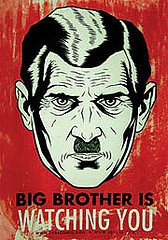
  1. The wars are Orwellian unlawful because war law makes armed attack illegal unless first attacked by another nation’s government.
  2. Using debt as a so-called money supply is economic criminal fraud because it creates ever-increasing aggregate debt that can never be repaid (because that’s what we use for money). This is just one cartel of many that shift trillions of the 99%’s wealth to the 1%.
  3. The crimes and lies are only possible through ZIOCONNED corporate media’s complicity.

The above policies kill millions, harm billions, and loot trillions. As such, the 99% have an interest to occupy Bilderberg and expose its members as the architects of these criminal policies. Click here for Infowars’ live coverage of the Bilderberg conference.

The endgame is the surrender or arrests of “emperor has no clothes” obvious War Criminals and debt-slave drivers....

The ZIO Israel lobbying group, Anti-Defamation League (ADL), defines Bilderberg as “a legitimate business entity with ties to Europe and America”. It also raises the hoax of ‘Jewish hatred’ against people who consider Biderberg as world’s most powerful economical and political secret society.

“Various far-right extremists and conspiracy theorists, however, charge that the group is a shadowy force seeking to control world events, exerting allegedly dominating powers of international influence to promote a “new world order” under their control. The extremists claim that Presidential candidates of both major U.S. political parties are controlled by the Bilderberg group; among those often mentioned in such conspiracy-oriented propaganda are David Rockefeller, the ZIO Clintons and the humongous war criminal Henry Kissinger,” says ADL official website, June 2011.


http://rehmat1.com/2011/06/09/bilderberg-kissinger-and-jewish-hatred/