Monday, June 6, 2011

Eliminate Ponzi-schemes, terminate the usury charades and take back your money - and their power - from private banks....


Eliminate Ponzi-schemes, terminate the usury charades and take back your money - and their power - from private banks....

This crisis has an exit...
By Ellen Brown

Countries everywhere are facing debt crises today, precipitated by the credit collapse of 2008. Public services are being slashed and public assets are being sold off, in a futile attempt to balance budgets that can't be balanced because the money supply itself has shrunk. Governments usually get the blame for excessive spending, but governments did not initiate the crisis. The collapse was in the banking system, and in the credit that it is responsible for creating and sustaining.

Contrary to popular belief, most of our money today is not created by governments. It is created by private banks as loans. The private system of money creation has grown so powerful over the centuries that it has come to dominate governments globally. The system, however, contains the seeds of its own destruction. The source of its power is also a fatal design flaw.

The flaw is that banks advance "bank credit" that must be paid back with interest, continually requiring more money to be repaid than was created as loans; the only way to get additional money from the private banking system is to take out yet more loans, at interest. The system is, in effect, a pyramid scheme. When the banks run out of borrowers to support the pyramid, it must collapse; and we are nearing that point today.

There are more sustainable ways to run a banking and credit system, as will be shown.

How banks create money
The process by which banks create money was explained by the Chicago Federal Reserve in a booklet called Modern Money Mechanics. It states:
  • "The actual process of money creation takes place primarily in banks." [p3]
  • "[Banks] do not really pay out loans from the money they receive as deposits. If they did this, no additional money would be created. What they do when they make loans is to accept promissory notes in exchange for credits to the borrowers' transaction accounts. Loans (assets) and deposits (liabilities) both rise [by the same amount]." [p6]
  • "With a uniform 10 percent reserve requirement, a $1 increase in reserves would support $10 of additional transaction accounts." [p49]
  • A $100 deposit supports a $90 loan, which becomes a $90 deposit in another bank, which supports an $81 loan, etc.

    That's the conventional model, but banks actually create the loans first. They find the deposits to meet the reserve requirement later. Banks create money as loans, which become checks, which go into other banks. Then, if needed to clear the checks, they borrow the money back from the other banks. In effect, they borrow back the money they just created, pocketing the spread between the interest rates as their profit. The rate at which banks can borrow from each other in the United States today - the Fed funds rate - is an extremely low 0.2%.

    How the system evolved
    The current system of privately issued money is traced in Modern Money Mechanics to the 17th century goldsmiths. People who left gold with the goldsmiths for safekeeping would be issued paper receipts for it called "banknotes". Other people who wanted to borrow money were also happy to accept paper banknotes in place of gold, since the notes were safer and more convenient to carry around.

    The sleight of hand came in when the goldsmiths discovered that people would come for their gold only about 10% of the time. That meant that up to 10 times as many notes could be printed and lent as the goldsmiths had gold. Ninety percent of the notes were basically counterfeited.

    This system is called "fractional reserve" banking and was institutionalized when the Bank of England was founded in 1694. The bank was allowed to lend its own banknotes to the government, forming the national money supply. Only the interest on the loans had to be paid. The debt was rolled over indefinitely.

    That is still true today. The US federal debt is never paid off but just continues to grow, forming the basis of the US money supply.
    The public banking alternative
    There are other ways to create a banking system, ways that would eliminate its Ponzi-scheme elements and make the system sustainable. One solution is to make the loans interest-free; but for Western economies today, that transition could be difficult.

    Another alternative is for banks to be publicly owned. If the people collectively own the bank, the interest and profits go back to the government and the people, who benefit from decreased taxes, increased public services, and cheaper public infrastructure. Cutting out interest has been shown to reduce the cost of public projects by 30-50%.

    In the United States, this system of publicly owned banks goes back to the American colonists. The best of the colonial models was in Benjamin Franklin's colony of Pennsylvania, where the government operated a "land bank". Money was printed and lent into the community. It recycled back to the government and could be lent and relent.

    The system was mathematically sound because the interest and profits returned to the government, which then spent the money back into the economy in place of taxes. Private banks, by contrast, generally lend their profits back into the economy, or invest in private money-making ventures in which more is always expected back than was originally invested.

    During the period that the Pennsylvania system was in place, the colonists paid no taxes except excise taxes, prices did not inflate, and there was no government debt.

    How private banknotes became the national US currency
    The Pennsylvania credit system was sustainable, but some early American colonial governments just printed and spent, inflating the money supply and devaluing the currency. The British merchants complained, prompting King George II to forbid the colonists to issue their own money.

    Taxes had to be paid to England in gold. That meant going into debt to the English bankers. The result was a massive depression. The colonists finally rebelled and went back to issuing their own money, precipitating the American Revolution.

    In an international first, the colonists funded a war against a major power with mere paper receipts, and won. But the British counterattacked by waging a currency war. They massively counterfeited the colonists' paper money at a time when this was easy to do. By the end of the war, the paper scrip was virtually worthless. After it lost its value, the colonists were so disillusioned with paper money that they left the power to issue it out of the US constitution.

    Meanwhile, Alexander Hamilton, the first US Treasury Secretary, was faced with huge war debts, and he had no money to pay them. He therefore resorted to the ruse used in England known as fractional reserve banking. In 1791, Hamilton set up the First US Bank, a largely private bank that would print banknotes "backed" by gold and lend them to the government.

    The ruse worked: the paper banknotes expanded the money supply, the debts were paid, and the economy thrived. But it was the beginning of a system of government funded by debt to private bankers, who lent banknotes only nominally backed by gold.

    During the American Civil War (1861–1865), president Abraham Lincoln avoided a crippling war debt by returning to the system of government-issued money of the American colonists. He issued US Notes from the Treasury called "Greenbacks" rather than borrowing at usurious interest rates. But Lincoln was assassinated, and Greenback issuance was halted.

    In 1913, the privately owned Federal Reserve was authorized to issue its own Federal Reserve Notes as the national currency. These notes were then lent to the government, eliminating the government's own power to issue money (except for coins). The Federal Reserve was set up to prevent bank runs, but 20 years later we had the Great Depression, the greatest bank run in history. Robert H Hemphill, credit manager of the Federal Reserve Bank of Atlanta, wrote in 1934:
    We are completely dependent on the commercial Banks. Someone has to borrow every dollar we have in circulation, cash or credit. If the Banks create ample synthetic money we are prosperous; if not, we starve.
  • For the bankers, however, it was a good system. It put them in control.

    Setting the global debt trap
    Professor Carroll Quigley was an insider groomed by the international bankers. He wrote in Tragedy and Hope in 1966:
    The powers of financial capitalism had another far reaching aim, nothing less than to create a world system of financial control in private hands able to dominate the political system of each country and the economy of the world as a whole.

    The apex of the system was to be the Bank for International Settlements [BIS] in Basle, Switzerland, a private bank owned and controlled by the world's central banks which were themselves private corporations. Each central bank... sought to dominate its government by its ability to control Treasury loans…
    The debt trap was set in stages. In 1971, the dollar went off the gold standard internationally. Currencies were unpegged from gold and allowed to "float" in currency markets, competing with other currencies, making them vulnerable to speculation and manipulation.

    In 1974, a secret agreement was entered into with the members of the Organization of Petroleum Exporting Countries to sell oil only in dollars. The price of oil was then suddenly quadrupled. Countries lacking oil had to borrow dollars from US banks.

    In 1980, interest rates were raised to 20%. At 20% compound interest, debt doubles in under four years. As a result, most of the world became crippled by debt. By 2001, developing nations had repaid the principal originally owed on their debts six times over; but their total debt had quadrupled because of interest payments.

    When debtor nations could not pay the banks, the International Monetary Fund stepped in with loans - with strings attached. The debtors had to agree to "austerity measures," including:
  • Cutting social services;
  • Privatizing banks and public utilities;
  • Opening markets to foreign investors;
  • Letting currencies "float".

    Today, austerity measures are being imposed not just in developing countries but in the European Union and on US States.
    The BIS: apex of the private central banking pyramid
    What Professor Quigley foretold about the Bank for International Settlements (BIS) has also come to pass. The BIS now has 55 member nations and heads the global financial pyramid.

    The power of the BIS was seen in 1988, when it raised the capital requirement of its member banks from 6% to 8% in an accord called Basel I. The result was to cripple the Japanese banks, which until then were the world's largest creditors. Japan entered a recession from which it has not yet recovered.

    US banks managed to escape by dodging the capital requirement. They did this by moving loans off their books, bundling them up as "securities", and selling them to investors.

    To persuade the investors to buy them, these mortgage-backed securities were protected against default with "derivatives", which were basically just bets. The "protection seller" collected a premium for agreeing to pay in the event of default. The "protection buyer" bought the premium. Owning the asset was not required. Like gamblers at a horse race, derivative players could bet without owning a horse. Derivatives became a very popular form of gambling. The result was the mother of all bubbles, exceeding US$500 trillion by the end of 2007.

    Because of securitization and derivatives, credit mushroomed. Virtually anyone who walked in the door could get a loan.

    The tipping point came in August 2007, with the collapse of two hedge funds. When the derivatives scheme was exposed, the market for derivative-protected securities suddenly dried up. But the US stock market did not collapse until November 2007, when new accounting rules were imposed. The rules grew out of the Basel II Accords initiated by the BIS in 2004.

    "Mark to market" accounting required banks to value their assets according to market demand that day. Many US banks, like those in Japan in the 1990s, suddenly had insufficient capital to make new loans. The result was a credit crisis from which the US has not yet recovered.

    The BIS has now become global regulator, just as Quigley foresaw. In April 2009, the Group of 20 nations agreed to be regulated by a Financial Stability Board based in the BIS, and to comply with "standards and codes" set by the board. The codes are only guidelines, but countries that fail to comply risk downgrades in their credit ratings, something so costly that the guidelines have effectively become laws.

    An article on the BIS website states that central banks in the Central Bank Governance Network should have as their single or primary objective "to preserve price stability". That means governments should not devalue the national currency by inflating the money supply; and that means not "printing money" or borrowing credit created by their own central banks.

    Like the American colonies after King George took away their power to issue their own money, governments must fund their deficits by borrowing from private banks. The bankers' global control over currency issuance has become virtually complete.

    The effects of this policy are particularly evident in the European Union, where EU rules allow deficits of only 3% of government budgets and prevent member countries from either issuing their own money or borrowing credit advanced by their own central banks. Member nations must borrow instead from the European Central Bank, private international banks, or the IMF. The result has been forced austerity measures, as seen in Greece and Ireland. The system is so unsustainable that commentators are predicting that the EU may break up.

    The way out: return the money power to public control
    To escape the debt trap of the global bankers, the power to create the national money supply needs to be restored to national governments. Alternatives include:
  • Legal tender issued directly by national treasuries and spent on national budgets;
  • Publicly owned central banks empowered to advance the nation's credit and lend it to the government interest-free;
  • Nationalization of bankrupt banks considered "too big to fail". These banks could then issue credit to the public and serve the public's banking needs, with the profits recycling back to the government, defraying the tax burden on the people;
  • Publicly owned local banks (state, provincial, or municipal).

    Publicly owned banks have been successfully established and operated in many countries, including Australia, New Zealand, Canada, Germany, Switzerland, India, China, Japan, Korea, and Malaysia. In the United States there is currently only one state-owned bank, the Bank of North Dakota.

    The model, however, has proven to be highly successful. North Dakota is the only US state to have escaped the credit crisis unscathed. In 2009, while other states floundered, North Dakota had its largest budget surplus ever. In 2008, the Bank of North Dakota (BND) had a return on equity of 25%. North Dakota has the lowest unemployment rate in the country and the lowest default rate on loans. It also has the most local banks per capita.

    North Dakota has had its own bank since 1919, when farmers were losing their farms to the Wall Street bankers. They organized, won an election, and passed legislation. The state is required by law to deposit all its revenues in the BND. As with the sustainable model of the bank of colonial Pennsylvania, interest and profits are returned to the government and to the local economy.

    A growing movement is afoot in the United States to copy this public banking model in other states. Fourteen US state legislatures have now initiated bills for state-owned banks.

    The model could also be replicated in other countries. In Ireland, for example, where the major banks are insolvent and are already nationalized or soon will be, the government could deposit its revenues in its own publicly owned banks, add sufficient capital to meet capital requirements, and leverage these funds to create interest-free credit for its own local needs.

    That is exactly what Alexander Hamilton did when faced with government debts that were impossible to repay: he put the government's existing funds in a bank, then borrowed the money back several times over, employing the accepted "fractional reserve" model.

    Japan's solution is also a variant of what Alexander Hamilton proposed two centuries earlier. Japan retains its status as the third-largest economy in the world although it has a debt to gross domestic product (GDP) ratio of 226%. Japan has "monetized" the national debt, turning it into the national money supply. The government-owned Bank of Japan holds Japanese government debt equal to 100% of the nation's GDP; and because the government owns the bank, this loan is interest-free and can be rolled over indefinitely. An interest-free loan rolled over indefinitely is the equivalent of issuing money.

    Ellen Brown is an attorney and president of the Public Banking Institute,
  • http://PublicBankingInstitute.org.


  • The international bankster elite hide themselves behind complicated 'legal' creations. Money is used to control the people of this planet, so the people who create that money are at the top of the 'food chain'. Who creates our money? My research leads me to believe that the House of Rothschild is at the top of the NWO pyramid of power, but I believe there is an entity over them which hides behind a curtain of secrecy. I can't believe the Queen or the Pope have any real power, rather they are the public representatives of the real power brokers.

    http://www.henrymakow.com/by_alcuin_bramertonfor_henryma.html

    It is accurate to posit that Australia, New Zealand and Canada are not independent, sovereign countries. However, these nations are not owned and run by the UK; they are owned and run by the House of Windsor Crown Temple syndicate within the City of London Corporation. The head signatory of the Crown Temple syndicate is Elizabeth Windsor (Queen Elizabeth II of England).

    It should not be forgotten that the most powerful financial syndicate in the Western World is that of the European Rothschilds. The Rothschilds, because of their power base inside the City of London Corporation, have a controlling membership of the London Crown Temple syndicate, and they also have executive control of the Vatican and the Mafia though the P2 Masonic Lodge in Italy.

    The financial affairs of the new UK coalition government in London are also Rothschild-controlled.

    Queen Elizabeth II fronts for the Rothschilds. She is the largest landowner on Earth. She is Head of State of the United Kingdom and of thirty one other states and territories, and is the legal owner of 6,600 million acres of land, one sixth of the Earth's land surface. A conservative estimate of the value of the Crown Temple syndicate's land holding, under the Queen's signature, is £17.6 trillion.

    The Queen's syndicate land holdings are based on the laws of the countries she owns and her land title is valid in each of those countries. Her main holdings are Canada, the 2nd largest country on Earth, with 2,467 million acres, Australia, the 7th largest country on Earth with 1,900 million acres, Papua New Guinea with114 million acres, New Zealand with 66 million acres, and the UK with 60 million acres.

    Elizabeth Windsor and her covert syndicate in London are the world's largest landowners by a significant margin. The next largest landowner is the Russian state, with an overall ownership of 4,219 million acres, and a direct ownership comparable with the Queen's land holding of 2,447 million acres. The 3rd largest landowner is the Chinese state, which claims all of Chinese land, about 2,365 million acres.

    The 4th largest landowner on Earth is often said to be the Federal Government of the United States, which owns about one third of the land area of the USA, 760 million acres. However, this Washington DC private corporation Federal Estate is actually owned and controlled by the London Crown Temple syndicate. Indeed, at the present time, the London syndicate in partnership with an old family Chinese syndicate, hold, and have activated, a $47 trillion World Court Writ of Execution and Lien on the US Treasury and the US Federal Reserve Board.

    The five largest "personal" landowners on Earth, at present, are Queen Elizabeth II of England (6,600 million acres), King Abdullah of Saudi Arabia (553 million acres), King Bhumibol of Thailand (126 million acres), King Mohammed IV of Morocco (113 million acres) and Sultan Quaboos of Oman (76 million acres). In reality, however, these named individuals are just the head signatories of old bloodline syndicates which act corporately through hidden family trusts....
    At the excellent globalresearch.ca website is the first of a four-part series attempting to decipher who the real global power-brokers are. My understanding is that the House of Rothschild is at the top of the international bankers pyramid of power, but I'm willing to change my opinion if shown the evidence.

    My opinion is that the political ideology of Zionism and the Zionist state of Israel was created by the House of Rothschild, which is using them to foment WW-III, which will result in the destruction of Israel. Zionism and the Zionist state are the worst enemies of Jewish people, yet many Jews ignorantly and foolishly support it. Fortunately there are many enlightened Jews who are exposing Zionists for what they really are - a mirror image of Nazis. Nazi Germany was armed to the teeth, and then used as a bully against its neighbors, and the world. Israel is armed to the teeth, and then used as a bully against its neighbors, and the world. What happened to Nazi Germany is going to happen to Zionist Israel, unless the people of Israel join us in the world-wide revolution against international Zionism and its creators that control international banking.

    (Part one of a four-part series)

    The Four Horsemen of Banking (Bank of America, JP Morgan Chase, Citigroup and Wells Fargo) own the Four Horsemen of Oil (Exxon Mobil, Royal Dutch/Shell, BP and Chevron Texaco); in tandem with Deutsche Bank, BNP, Barclays and other European old money behemoths. But their monopoly over the global economy does not end at the edge of the oil patch.

    According to company 10K filings to the SEC, the Four Horsemen of Banking are among the top ten stock holders of virtually every Fortune 500 corporation.[1]

    So who then are the stockholders in these money center banks?

    This information is guarded much more closely. My queries to bank regulatory agencies regarding stock ownership in the top 25 US bank holding companies were given Freedom of Information Act status, before being denied on “national security” grounds. This is rather ironic, since many of the bank’s stockholders reside in Europe.

    more>> http://globalresearch.ca/index.php?context=va&aid=25080


    China shops for Latin American oil, food, minerals, faster than it is being produced...


    CARACAS, Venezuela -- Latin America is blessed with a wealth of natural resources such as oil, copper and soy, and seeks investment and loans to capitalize on them. China needs the commodities to keep its economy growing and has about $3 trillion in reserves to burn.

    Those interests have come together in a burgeoning and unorthodox partnership, as China lends and invests tens of billions of dollars in countries around Latin America in return for a guaranteed flow of commodities, particularly oil.

    Recent deals have made China a key financier to the governments of Venezuela and Argentina. At the same time, Chinese companies have secured a decade's worth of oil from Venezuela and Brazil, and steady supplies of wheat, soybeans and natural gas from Argentina.

    China is breaking new ground by aggressively locking down commodities around Latin America through large loans, investments and other financial arrangements, said Orville Schell, director of the Center on U.S.-China Relations at the Asia Society in New York.

    "I don't know of any other government which has done this sort of securing of rights for commodities and natural resources so systematically around the Third World as China, and they've used a whole host of new financial instruments to do this," Schell said.

    "China's been very, very prolific in spreading its investments around Africa and Latin America, even though the terms aren't ideal."

    Ernesto Fernandez Taboada, director of the Argentine-Chinese Chamber of Production, Industry and Commerce, said China is simply making sure it has the resources it needs to continue growing its economy, which, by some accounts, is projected to surpass the U.S.'s by 2020.

    "For China, this is a strategic, long-term investment," Fernandez Taboada said. "They're thinking in the future, not just in the moment. These oil investments, for example, are for 15 to 20 years."

    Some of the largest investments have gone to Brazil and Argentina, but China has extended even bigger loans to Venezuela, agreeing to provide more than $32 billion to President Hugo Chavez's government.

    Venezuela will pay its debt in oil, and in increasing amounts of it during the next decade. The infusion of cash has swiftly made China Venezuela's biggest foreign lender, enabling Chavez to boost spending ahead of next year's presidential election.

    "Viva China!" Chavez exclaimed during a televised meeting with business leaders from Beijing, thanking them for helping set up mobile phone factories and build railways and public housing in Venezuela. He gushed: "I'm in love with China."

    The relationship is driven in part by Chavez's eagerness to form alliances that exclude the U.S. But it's also good business for Chinese companies: Venezuela says it has been exporting to China about 460,000 barrels a day, about 20 percent of its oil exports, according to official figures. It hopes to double that soon.

    "Venezuela has what we need," said Chen Ping, political counselor at the Chinese Embassy in Caracas. "And we also have what they need, for example technology ... Therefore we can help each other mutually."

    The loans are typically secured against revenues from oil sales to Chinese companies, purportedly at market prices, though there could be discounts in some cases, said Erica Downs, an expert at the Brookings Institution think tank in Washington. She wrote a March report on the China Development Bank's energy deals worldwide.

    In many cases, financing is being channeled through the state-controlled China Development Bank, which has worked with Chinese companies to lock in commodity supplies.

    Downs said such loans give Chinese state oil companies an edge by allowing them special access to local projects. In some cases, she said, such as in Venezuela and Argentina, the loans appear tied to hiring Chinese companies that carry out public works projects for the borrowing government.

    China's financing has also been unique, she said, in that in recent years "virtually no other financial institutions were willing to lend such large amounts of capital for such long terms."

    Countries such as Venezuela and Ecuador would otherwise have few options for obtaining such large lines of credit, in part due to their presidents' hostility toward traditional lenders such as the World Bank and the International Monetary Fund, Downs said.

    The China Development Bank has become a convenient "lender of last resort," Downs said, and Venezuela's government, in fact, has become the bank's biggest foreign borrower.

    In Ecuador, the Chinese oil company PetroChina agreed in 2009 to lend $1 billion to state company PetroEcuador in exchange for oil deliveries. The China Development Bank also agreed to lend $1 billion last year to Ecuador's government, to be repaid through oil shipments.

    The Chinese stake appears set to grow exponentially.

    Direct Chinese investments totaled more than $15 billion in Latin America and the Caribbean last year - 9 percent of the region's foreign direct investment, according to a May report by the U.N. Economic Commission for Latin America and the Caribbean.

    The report said that while the U.S. is still Latin America's largest investment source, China has climbed to third place, behind the Netherlands.

    In Argentina, Chinese companies have even replaced U.S. and British corporations in controlling lucrative natural gas and oil resources.

    Last year, the state-owned Chinese oil company CNOOC entered into a 50-50 joint venture with Bridas Energy Holdings Ltd., a family owned Argentine company. The joint venture then bought out British company BP's shares in Argentina-based Pan American Energy, giving it 18 percent of Argentina's oil and natural gas production. This year, the venture also purchased U.S.-based Exxon Mobil Corp.'s interests in Argentina, Paraguay and Uruguay, including a refinery and more than 700 service stations.

    "Clearly, the U.S. remains the significant actor in Latin America and will remain so for the foreseeable future," said Eric Farnsworth, vice president of the Council of the Americas, a U.S.-based business group. "But China's a huge part of the scene now. It was commodities exports to China over the last five years that allowed Latin America to weather the economic turmoil."

    One Chinese company not only locked in a long-term supply of commodities, but also set a more stable price for years to come and circumvented market rates, which have soared in part because of Chinese demand.

    China and Chile created a $2 billion sales, finance and investment joint venture in 2005 that guaranteed China 836,250 metric tons of copper over 15 years, at rates partially fixed on what was then the market price of $2.07 a pound. Chile's state-owned Codelco mining company had to put up its entire 49 percent interest in the venture as collateral, and give China Minmetals Corp. an option to purchase 100 percent of one of the world's most promising copper mines.

    Chileans criticized the deal as a threat to their patrimony as they became aware of its details and copper prices soared. Both sides backed off the Chinese purchase option in 2008 to fend off the criticism, but with copper now trading above $4 a pound, Chile's top client is still getting thousands of tons of copper at far below market prices.

    China also controls 50 percent of Argentina's largest oil field, Cerro Dragon, and all the oil and gas reserves in the far southern Argentine province of Santa Cruz over the next 40 years, deals that became anti-government campaign issues in provincial elections.

    During recent visits to Brazil, Schell said he has heard wariness from businesspeople about a system in which "Brazil sends their natural resources and China sends their flip-flops and consumer goods."

    Rubens Barbosa, Brazilian ambassador to the U.S. from 1999 to 2004 and now a business consultant, said Brazilian officials have complained that cheap Chinese exports have destroyed domestic industries such as shoe and textile manufacturers. Brazil this year imposed antidumping tariffs on imports of some Chinese fibers within months of China becoming Brazil's biggest trading partner.

    "With trade, we have a problem because the aggressiveness of Chinese companies is very strong," Barbosa said. "But the government still has a lot of interest in these relations with China. China is now the principal partner of Brazil."

    China's commercial ties with Brazil continue to grow. About 14 percent of the South American country's oil production went to China in 2009, and that portion is expected to expand because Brazilian oil company Petrobras signed a 10-year deal with Chinese-owned Unipec Asia to export 150,000 barrels of oil a day in the first year. The deal calls for exports of 200,000 barrels a day for the next nine years. At the same time, Petrobras secured a $10 billion, 10-year loan from the China Development Bank.

    Petrobras says the deals were separate and that the oil is not being used to pay back the loan. Still, the agreements ensure Chinese access to Brazil's booming oil production, which promises to skyrocket after vast offshore reserves discovered in 2008 come online.

    China has also been active across Argentina. The China Development Bank has offered a $2.6 billion, 10-year loan to revive a freight train system connecting Buenos Aires to much of Argentina's central heartland. In the country's Rio Negro province, the Metallurgical Corporation of China has invested $80 million to reactivate an iron ore mine, and China's Beidahuang Group company has promised $1.4 billion in irrigation infrastructure in exchange for a 20-year contract to grow corn, wheat, soy and dairy on otherwise dry land for Chinese consumers.

    And in remote southern Tierra del Fuego, near the tip of South America, Chinese companies are investing $1 billion, not only to produce fertilizer, but to build an energy plant, for which Argentina has promised China natural gas for 25 years.

    "Two weeks ago, the Chinese commerce minister visited us with 60 business executives, and they showed great interest in investing in other sectors," Fernandez Taboada said. "There is a fundamental expansion of China in Latin America. In all the countries, from Mexico on south."

    According to Schell, China is just getting started.

    "This is a real tipping point moment, of which the Chinese investments in commodities and extractive resources of Latin America is just the opening bell," he said. "Who's got the money? And it's not the United States any longer. It's China. This is the next great pool of (foreign investment) that the world is going to reckon with in myriad ways."

    China has established consultation and dialogue mechanisms on defense and security with 22 countries, and has military-to-military exchanges with more than 150 countries, Chinese Defense Minister Liang Guanglie said at a regional security dialogue on Sunday.

    Speaking at the Shangri-La Dialogue organized by the London- based International Institute for Strategic Studies, Liang, also a State Councilor, said China has been promoting mutual trust and common interests with other countries through defense and security cooperation, with close to 400 military delegations to and from China each year.

    China signed an agreement with Russia in 2009 to notify each other of missile launches. Between the defense ministries of China and the United States, direct phone link has also been set up.

    "All these exchanges have helped the international community know better China's strategic pursuits and (the current condition) of its military forces," he said. "These efforts also help avoid various misunderstandings and mis-assessments and prevent conflicts and crises."

    Liang said that he was at the multilateral Shangri-La Dialogue to "advance peace, cooperation and harmony" and work with defense leaders from other countries to promote exchanges and mutual trust.

    Liang delivered a keynote speech at the dialogue on Sunday on China's stance and efforts to promote defense and security cooperation in the Asia Pacific, saying that China would hold steadfast to its pursuit of peace and development, the defensive nature of its defense policies, as well as the pursuit of good relations with its neighbors and other countries.

    The Chinese military has held more than 40 joint exercises and training with more than 20 other countries for purposes such as anti-terrorism and disaster relief. It also provided aid where it can, joined more than 20 United Nations peace missions, and sent professional rescuers to countries hit by natural disasters like quakes and tsunamis, Liang said.

    The Chinese defense minister set out four principles for advancing security cooperation in the Asia Pacific.

    -- mutual respect, equal footing, and consideration for the core interests and key concerns of others.

    -- advance mutual understanding, trust and assess the strategic intention of other countries as it is.

    -- pursue mutual benefits and win-win outcome, and no alliance directed against a third party.

    -- cooperation should be open and inclusive, and all countries are welcome to contribute to Asia Pacific security.

    Liang also said that by playing larger roles in international and regional affairs, the emerging countries have created not threats, but opportunities, for Asia Pacific peace and security.

    "We are in a new era that calls for a new way of thinking," he said. "The assumption of zero sum in terms of security and the cold-war mentality are increasing not congruent with the era we are in now."

    Liang said that it was not helpful to ignore what other countries have done and twist their strategic intentions with speculation based sheerly differences on ideology and social systems, as such speculations often create enemies.

    Liang said that trust begins with exchanges and that different countries should enhance dialogue and exchanges on the basis of mutual respect and equal footing, and objectively and reasonably assess the others' strategies.


    http://news.xinhuanet.com/english2010/china/2011-06/05/c_13912193.htm


    The usual suspects that create ridiculous wars, and fiat currency Ponzi systems are stealing everyone blind.


    The usual suspects create ridiculous wars, and massive fiat currency Ponzi systems are stealing everyone blind....

    Can we call it a depression yet? Or do we have to keep calling it the F'ing Great Recession?


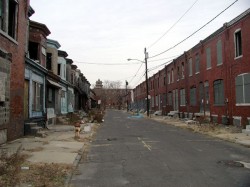
    Really, it's hilarious that this is even being discussed at all. Was it a bubble? Of course it was. Everyone knows it was. Will prices return to their bubble levels? Yes, but the way it will happen will be the Detroit Way. The housing stock will be reduced. Governments will cover the banks on this end too. And yes, that means that there will be many more Americans without houses. Most likely we will see massive dislocations, multitudes of homeless, and poverty at indescribable levels. Or, rather, we won't 'see' it. It will be there all around us, but we won't see it.

    See, that's really the story behind the story. How folks see the current situation depends on how they see the last three decades, since the Reagan years. Carter's 'malaise' speech posed a question: whither America? Reagan provided the answer. The answer was the screeching rise of predatory capital, both domestically and globally. Volker started it all, by knocking everyone down several pegs with a vicious recession, a monetary policy that, as vicious as it was domestically, was truly savage on a global level.

    Then the glorious recovery began. And we all pretended not to notice that suddenly, we were all working harder for less. Almost overnight, women in the workforce became a necessity, not a choice. But we didn't notice. It took two incomes to run a household. But we didn't notice. Inflation began to run away, but because you could buy cheaper and cheaper goods at Wal-Mart (so cheap that it made no sense to fix anything anymore), no one noticed. The roof over your head, the education for your children, the medical care ... all these things began to skyrocket in cost ... but you could get loans ... more and more loans. And you could work more jobs. During the Clinton era, two jobs wasn't enough for a household anymore. Now Mom had a second job at night. Preachers railed about the 'breakdown of the American Family', but they always attributed this to the moral turpitude of ordinary people, who were having to work harder and harder just to keep things going, AND WERE DOING IT!

    Finally people lost all hope of keeping up. That's when the real loan frenzy started. Nothing made sense anymore, and there was no way that things could work out that anyone could really imagine. The future was just unimaginable. But economists said that the economy would keep expanding, without industries or jobs, because of sophisticated financing, and a second mortgage WOULD help with Sally's college expenses, or Dad's medical care, or the extra car that the extra jobs necessitated, and so maybe you could keep the household going, and surely the economists had to be right about how bright the future surely was ...

    And so we've been living in an economy that has been in a death spiral for decades, but - with a lot of help from Hollywood - we've imagined ourselves to be in a completely different place, in an economy revenant.
    We were experiencing the Glory that was Rome. We had our pride. And now we continue to refuse to open our eyes. We still have more guns than anyone else, more prisons than anyone else, and we still have the Dream Factory.

    But we don't have an economy. Not for most people.
    As Peter Schiff recently stated, "This is the end of the beginning." The real economic drop off is just about to kick in and it will be brutal. As Celente has said, there will be riots. People should be afraid of what is about to happen the next 5-10 years....
    It seems we just just cannot to go to that place of the only real explanation for the whole collapse - it is mostly by design. Lots of doors will open to the actual reality of the mechanisms of this pillaging if one is simply willing to look at the obvious.

    Recoveries with negative job growth? Only actual jobs being created are in the govt sector that creates nothing but endless debt? Housing market return or bubble? Are we really still spending time on these types of discussions? I apologize in advance at my tone but it is just too disgusting to me that much of the country and beyond are still propping up these frauds at this incredibly late juncture....

    The reality is when the dust settles, the banks and big corps will own most of the real assets on the cheap. The usual suspects that create ridiculous wars, and fiat currency ponzi systems are stealing everyone blind. Anyone that doesn't call it like it is either benefiting from it, afraid for their own head, or simply has no clue.

    Inflation on everything that is necessary for Americans to survive has already risen massively. Only ridiculous CPI equations that play hide the weenie and exclude food, housing and fuel do not spell this out on purpose....

    As necessities rise beyond reach, and no one has a job to be able to afford a home regardless the price, it will be clear who has won this game and how.

    Do we really think that all this crushing debt that has destroyed the third world (now most real assets are becoming owned by the bankers and big corps), and is now being wielded upon the West in similar fashion was not by design? Decades of duping the less fortunate has emboldened the global governance crowd to crush the Western world.

    It is criminal that it is not being called out by name by the "journalism" community. It is the biggest, most pervasive, most violent, most destructive economic pillaging the world has ever seen. Shame on us all for not reporting reality.

    The IMF announced they are prepared to provide $100T more credit to markets! Yippee. Anyone listening?! Credit is quite synonymous with DEBT last time I checked. Crushing, stifling, enslaving debt. They also announced they are ready to role out their new currency, the Bancor.

    How are those Greece pillagings, I mean bailouts, treating everyone? 2nd default in a blink? Wow, the bankers and politicians must really know what they are doing to have set up an immediate second default with their master bailout plans. You bet they do...they are now owning Greece, then Ireland, Spain, Portugal, Italy, France, Ukraine and many many more to come down the line....

    Contrasting the last depression with today:

    1. There was very little state debts then, now massive.
    2. There was reasonable Fed Govt debt, now it breaks calculators.
    3. There was not an estimated >$200T in exotic investment vehicles like derivatives (more money out of thin air). How do we resolve what some estimate is possibly more than double that number? It has to wash out at some point.
    4. Consumers had very little debt. Now >$14T.
    5. The US had manufacturing as great as the world has seen...now has very little thus cannot build itself out of debt.
    6. Did not have unlimited money printing of a currency backed by...NOTHING.

    Hey, I have a solution-a centralized global banking system. That way we could hand over all sovereignty right now!

    All empires die, and they always die from within. Only fools would think this one would be any different. We have every symptom of the death rattle of a former empire - rampant corruption, wealth consolidated in a tiny few's hands(we have more income disparity than Egypt and >30 other countries), multiple criminal illegal wars, false flag attacks, the Infamous White House Murder INC, UKUSA alliance of evils, Zioconned Intelligence agencies worldwide, utterly corrupt and complicit main stream media on a massive scale and the coliseum to distract the sheep, numerous attorneys perpetuating the game, justice system that only serves the cartels....etc etc.

    Lets start getting some courage shall we?


    Je préférerais généralement éliminer un adversaire mauvais avec une balle honnête plutôt qu’avec un canular malhonnête, made in USA’s Zioconned Dark rooms… :)

    There are some people who are shocked to learn that White House spokesmen issued 935 documented falsehoods to lie us into the barbaric White House Murder INC, the inside Job of 9/11, the Iraq war, Afghanistan, Pakistan, Lebanon, Gaza & More to come soon… This says nothing of the far greater number of lies told to create the “war on terror” itself. If it wasn’t for the flowing river of lies known as the “US Government,” we would not now be staring down the barrel of the nuclear gun at another innocent Muslim country. It took thousands of dedicated war party disinformation agents, working non-stop for decades, to give substance to the myth of al-CIAda, the official justification for the wars. It has taken many thousands more to sustain the war based on utter lies, against an imaginary enemy. It is only another small step to extend those lies about wars against imaginary enemies to Iran, an imaginary enemy with imaginary nuclear weapons.

    Bush, Cheney, Obomba and both of their Congresses have chosen to ride the raging river of lies known as the war on terrorism like lunatic “surf-Zionazis,” blinded to the dangers swimming just beneath the surface, oblivious to the destruction left in their wake. The humongous bills for the wars and for the destruction, killings, extra-judicial assassinations that the Zioconned USA have sown is coming due, before the end goals are met – before the world war can be jump-started. Strategic alliances are falling apart in reaction to America’s obvious goal of total world domination, Clean Break and full spectrum dominance…


    Saturday, June 4, 2011

    Ukraine To Be The Next Country To Face A Real Debt Crisis...


    Without IMF loans, Greek-style debt crisis may face Ukraine soonest...


    The Ukrainian economy may plunge to a "pre-default" level and experience problems similar to those facing Greece if Ukraine's cooperation with the International Monetary Fund (IMF) fails, Deputy Prime Minister Serhiy Tihipko has said.

    "The IMF's exit [from Ukraine] will immediately lower the country's rates, and the cost of our foreign debt, which has significantly expanded over the past three years... will immediately increase," Tihipko, who is also serving as minister for social policies, said in an interview with Ukraine's Inter TV channel.

    "Moreover, I can tell you that after we take another one or two loans, we may find ourselves in a pre-default situation," he added. "Then, we will face a situation like the one in Greece."

    In July 2010, the IMF approved a $15.15-billion standby loan for Ukraine "in support of the authorities' economic adjustment and reform program" following a request from Kiev. Ukraine has received two tranches with a total worth of $3.4 billion, but the fund has been reluctant to allocate new tranches, citing insufficient efforts by the Ukrainian government to cut budget deficit and its unwillingness to increase gas prices and raise the retirement age.

    Ukraine's inflation rate rose to 9.4 percent from 7.7 percent in April, its highest level in six months, as prices for food, alcohol and utilities increased. According to expert estimates, the figure may rise further to 12-13 percent by mid-July.

    The Ukrainian government has not been spending the money received from the IMF, Tihipko said. "All the money from the International Monetary Fund goes to currency reserves, it is being saved there... we don't take a hryvnia from those loans," he added.

    On Thursday, local news agency Unian published a copy of letter sent by Sergei Arbuzov, the head of Ukraine's National Bank, to Prime Minister Nikolai Azarov. In the letter, Arbuzov blames the government for undermining cooperation with the IMF and raises concerns about growing inflation in the country.

    Tihipko confirmed that such a letter had been received by the government. "There are certain risks, which Mr. Arbuzov stressed, and we understand this very well," he said.

    Ever since the Soviet Union broke up, Ukraine has been one of those textbook cases on how not to run an economy. Throw in Ukrainian - Russian animosity .... nationalism instead of rational government policies and conduct becomes the norm. Fortunately .... unlike Greece that owes tens of billions (if not more), Ukraine is not in that situation .... but like most of the former Soviet blocs they have their problems .... problems that will take a good generation or two to correct (I hope).

    Then again .... who are
    we to judge them.


    The World is experiencing severe food shortages .... China's drought is only going to make the situation worse....

    .


    The world is already at the brink of experiencing severe food shortages .... China's drought is only going to make the situation worse....
    How Will China's Food Supply Weather the Year of Drought?

    In China food supplies and food prices are deeply sensitive topics. So by the time the U.N.'s Food and Agriculture Organization issued a special alert warning in February that a prolonged drought in the North China Plain was a “potentially serious problem” for the country's winter wheat crop, China's leaders had already mobilized. President Hu Jintao and Premier Wen Jiabao made visits to farming regions in north China, pledging cash, equipment and manpower to ensure the crop survived.

    That wheat is now being harvested, and it seems the danger has been averted. This week China's agriculture minister Han Changfu predicted a bumper harvest, saying that a long-term increase in the production base as well as irrigation efforts aided wheat output. But even as Han stood in Henan wheat field celebrating a problem successfully averted, other worries were emerging.

    For an indication of the problem, take a look at the map below, which was issued by China's Ministry of Water Resources on June 2:

    Parts of central China, including the middle and lower reaches of the Yangtze River, are experiencing the lowest levels of rainfall in 50 years. The area in red is affected by serious drought, and the brown indicates extreme drought. The parched areas also happen to include much of China's main rice producing regions, which are in the early stages of their growing season. So for the second time in a year, a major grain crop in China is now at risk due to a shortage of water. So far no warnings of the seriousness of the FAO's February declaration on winter wheat have been issued. But anecdotal reports indicate some worries. A story by the state-run Xinhua news service late last month said that rice farmers in Hunan and Hubei provinces, two major rice growing areas, anticipated lower yields because of the drought. At the same time, the acreage of planted rice may climb thanks to higher prices, the Ministry of Agriculture said recently. That may help avoid too sharp a drop in overall output.

    Prices of some agricultural products heavily dependent on abundant water supplies have shot up recently, particularly cabbage, celery and bok choy, but the state press has emphasized that grain prices shouldn't jump due to the drought. Although China has grown to an economic colossus in recent decades, its deadly famines of the 20th century aren't forgotten. The Chinese government has put a high political importance on self-sufficiency in grains, and the country has largely managed to achieve that. China has built up a large strategic grain reserve, which can be tapped to ensure a steady supply and keep price rises in check. Statements by government officials in recent years indicate that China has grain reserves equivalent to 30-40% of annual production, although those figures are somewhat suspect as there have been cases of granaries overstating their reserves to boost revenues from the government. Even so, China's reserves are thought to be far above the minimum 17-18% reserve levels the FAO says are necessary for global food security.

    “The first message is because of China's stocks, there's no real reason to panic this year,” says Robert S. Zeigler, director general of the Philippines-based International Rice Research Institute. “The second message is that they will be okay for this year, but what happens next year? If you draw down stocks this year, you become quite vulnerable next year.” And that is perhaps the biggest worry about drought in China. The government has shown it will do whatever necessary to ensure healthy grain supply, and tap foreign suppliers to make up any shortfalls. But as food prices rise globally, the knock-on effect of any shortfall here will inevitably be felt elsewhere. “There are number way that this plays out,” says Zeigler. “Assuming a significant drop in production, China could opt to only draw down part of its reserves and seek make up rest on world markets. The world rice market is very thin, and that could quickly rattle the market just given size of China.”


    When Will China’s Economy Overtake America’s?


    2011-06-02


    ....
    China Has Divested 97 Percent of Its Holdings in U.S. Treasury Bills.

    ....
    China Has Divested 97 Percent of Its Holdings in U.S. Treasury Bills (That means: The shit is about to hit the fan)

    Date: Saturday, 4-Jun-2011 00:24:54 China has dropped 97 percent of its holdings in U.S. Treasury bills, decreasing its ownership of the short-term U.S. government securities from a peak of $210.4 billion in May 2009 to $5.69 billion in March 2011, the most recent month reported by the U.S. Treasury.

    BEIJING – Is China poised to surpass the United States to become the world’s largest economy? The International Monetary Fund recently predicted that the size of China’s economy would overtake that of the US in terms of purchasing power parity (PPP) by 2016.

    But a recent co-authored study by Robert Feenstra, an economist at the University of California, Davis, shows that global economic leadership would pass to China in 2014. And, even more radically, Arvind Subramanian of the Peterson Institute of International Economics argues that China actually surpassed the US in PPP terms in 2010.

    Purchasing power parity measures a country’s income using a set of international prices applied to all economies. Prices in developing countries are usually lower than in the developed countries. Therefore, their income could be underestimated if calculated only according to the exchange rate. Income measured in PPP helps to avoid this problem.

    But estimating PPP income raises its own set of problems. One consists in the fact that every country has a different consumption basket, with the greatest disparity between developing and developed countries. For example, foods usually account for 40% or more of household expenditure in a typical developing country, whereas the figure is less than 20% in most developed countries.

    The purpose of PPP comparison is to measure a country’s real quality of life. In this case, it can be thought of as comparing each country’s aggregate good, composed of the goods in each country’s consumption basket. But this aggregate good does not have the same components across countries. That is, PPP calculations effectively compare apples with oranges.

    This argument may sound technical, but it has profound implications for cross-country comparisons of life quality. Suppose we compare two countries. One of them is agriculture-based, and people consume only food, while the other is industry-based, and people not only consume food but also buy clothes. The share of their expenditure on these two items is 20% and 80%, respectively.

    Suppose, further, that per capita nominal income at the market exchange rate in the second country is four times higher than in the first. Food prices are the same in the two countries, while in the second country, the price of cloth is five times higher than the price of food.

    In this example, the price of the aggregate good in the second country is 4.2 times the price of the aggregate good in the first country. Further calculation reveals that, in PPP terms, a person in the second country is 5% poorer than a person in the first country!

    This absurd result is possible only because PPP is comparing two different consumption bundles. But the consumption basket of an average Chinese is vastly different from the consumption basket of an average American, so PPP comparisons between China and the US can be misleading.

    PPP gives an answer to the following question: how much does a Chinese need to earn to maintain his quality of life in China when he moves to the US?

    But this question is neither intuitive nor realistic. When it comes to the comparison of purchasing power in the international market, a more sensible question is: how many goods can a Chinese buy in the US using the income he earns in China? One must rely on nominal income to provide an answer to this question. In this case, a 10% appreciation of the renminbi increases the purchasing power of a Chinese person in the US by exactly 10%, whereas his life quality does not change in PPP terms.

    But China would surpass the US in a relatively short period of time even if we measured both countries’ economies in nominal terms. Assuming that the Chinese and US economies grow, respectively, by 8% and 3% in real terms, that China’s inflation rate is 3.6% and America’s is 2% (the averages of the last decade), and that the renminbi appreciates against the dollar by 3% per year (the average of the last six years), China would become the world’s largest economy by 2021. By that time, both countries’ GDP will be about $24 trillion, perhaps triple the size of the third largest economy, either Japan or Germany.

    Assuming 8% growth for China may or may not be a sure bet. But if China grew by 9-10% in the first five years and by 6-7% in the next five years, the target for an average of 8% between now and 2021 would be met.

    The world has already begun to demand that China assume greater responsibility for the global economy’s health. As China’s economy continues to grow and eventually matches US GDP, this demand will become stronger. By almost all recent estimates, China has little time to prepare....

    The assessment of China overtaking the U.S. economy is a bit premature .... but it is true that if present trends are any indication, the Chinese will be the dominant economic power by the late 2020s, and in regards to military power .... I would say by 2030 (if not sooner).

    On a side note .... a sign of things to come ....
    China Has Divested 97 Percent of Its Holdings in U.S. Treasury Bills.

    Yao Yang is the Director of the China Center for Economic Reform at Peking University.


    America's Hottest Investment: Farmland


    America's Hottest Investment: Farmland...

    This is usually a slow time of the year for farm sales. It's past prime planting season. Yet, Sam Kain, Des Moines area manager for land sales at Farmers National, is busy. He has 3 auctions this week. Most of the 30 or so bidders who show up will be farmers. But an increasing number of people buying land these days have no intention of planting seeds, at least not themselves. They are investors and a growing number of them are getting interested in farmland.

    Just how hot is American farmland? By some accounts the value of farmland is up 20% this year alone. That's better than stocks or gold. During the past two decades, owning farmland would have produced an annual return of nearly 11%, according to Hancock Agricultural Investment Group. And that covers a time period when tech stocks boomed and crashed, and housing boomed and crashed. So at a time when investors are still looking for safety, farmland is becoming the "it" investment.

    The New York Observer recently had a story saying more hedge funders have been talking farmland. Successful Canadian hedge fund manager Jean-Francois Tardiff, recently said he liked farmland. And a number of investors who gained fame for calling the housing crash, including Michael Burry and Passport Capital's John Burbank have been buying up farmland in the past two years. Famed investor Jim Rodgers, a long-time commodity bull, thinks farmland values will continue to rise.

    There are good reasons to believe that is the case, and some not so good. Let's start with the good.

    Crop prices are up. That's being driven in part by the emerging markets. Corn is America's number one crop. And nearly half of the corn we grow goes overseas to feed cattle and other animals. As China and the rest of Asia get wealthier they are going to eat more meat, and will therefore need more corn. What's more ethanol has had a huge impact on the price of corn as well. A higher oil price makes ethanol a more attractive substitute.

    Commodities prices have been falling recently. And fears that the US economy and the world economy could be slumping again have brought down the price of oil and other commodities. But demand for food is not going away. One of sign of that is that corn after dropping sharply with the rest of the commodity market in early May has rebounded to near its yearly highs, up to about $7.50 a bushel. That's up from about $4.00 a year ago.

    Then there is farm technology. Seeds are better than they used to be, requiring less water. Most tractors these days are equipped with GPS, many of which will allow farmers to map out the most and least productive areas of their land so they can better distribute seeds and fertilizer. And when I was recently out in Nebraska I saw a number of farmers just starting to experiment with double row plantin g- staggering seeds so they could fit two rows in space that is not much wider than what they used to use for one. The result is that crop yields are way up, and rising. If farmland is more productive than it was a few years ago, it should be worth more.

    All of this, though – the hedge funds getting in, the 20-year track record of positive returns, emerging market riches – smells a little bubbly. Remember housing, mortgage bonds and auction rate securities were also once thought of as can't lose investments. That was until the global pool of money rushed in and inflated the housing market. That global pool of money never really went away. It just went into hibernation or maybe into oil and gold. And now it is surfacing in farmland. The concern is that this is a fear trade, which people are making to protect themselves from inflation or worse. Once the general economy rebounds, and fear abates, farmland could plummet. Remember, farmland was a great investment in the 1970s. Not so much in the 1980s or 1990s.

    So is farmland overvalued now? Here's the math: In Nebraska where I was, the farmland prices have reached about $6,000 an acre. Based on the current price of fertilizer and seeds, the farmers told me, it costs about $4 to grow a bushel of corn. That means at current prices, each bushel produces a profit of $3.50. Farmers these days get about 200 bushels per acre of corn. That means a $6,000 investment produces an annual income of about $650, which is an income yield of 10.5%. That's more than double the earnings yield of the S&P 500. And it is three times the yield you would get with 10-year Treasury notes. So by that measure farmland doesn't look overvalued.

    That being said, it's very hard to invest in farmland. There are no mutual funds that do it. Pension funds are getting into investing in farmland. So if you are one of the few people who have a pension, you may already be invested in agriculture in some small way. But even if you have no investment exposure to farmland, this all matters. The farm economy, while small relatively in the scheme of things, is playing a more important role in our economic growth. And as farm prices continue to go up that positive affect should remain, creating profits for farmers and jobs in Nebraska, Iowa and elsewhere. What's more, the farm economy has rebounded much faster than the rest of the economy. The unemployment rate in Nebraska is about half that of the rest of the U.S. The reason in large part has to do with our weak dollar and exports. And that says something about where the U.S. economy is headed - I think in a positive way. We have the ability to make things here, even basic things and make money doing it and create jobs. That's a bit of good news in an otherwise bad day.


    Friday, June 3, 2011

    Are Global Metal Wars Looming, rare Earths are About to Be a Lot More Rare?


    Are Global Metal Wars Looming, rare Earths are About to Be a Lot More Rare?


    By Daniel McGroarty

    Terbium, Erbium, Lanthanum, Lithium, Cobalt, Cerium: This partial list is a high-tech hodge-podge of Rare Earths and Rare Metals increasingly making their way into headlines and legislative hearings. The challenge now, for policy-makers and the interested public, is to know which Rare Metals loom largest in our ongoing economic development, and whether we can ensure access to a steady supply.

    Given the stakes, there's no better time to learn the new language of resource scarcity. Strictly speaking, the Rare Earths - subject of concern due to China's current near-monopoly - include Scandium, Yttrium and the 15 so-called Lanthanides, Elements 59 through 71 on the Periodic Table. Rare Metals is the broader category, including Rare Earths but ranging well beyond.

    Many of the Rare Metals are by-products or co-products of base metals: Rhenium - used in jet-fighter engines, stealth aircraft and geo-synch satellites - comes from copper and molybdenum; Indium, from zinc; Tellurium, from copper again - these latter two essential to flat panel displays and photovoltaic solar cells. All told, the Rare Metals include more than 30 materials that - added together - account for a miniscule 0.005 percent of all metals presently mined.

    As a result, the Rare Metals are also often called "Minor Metals," a designation that is increasingly misleading as a catch-all category today. To borrow from human physiology, zinc is a "minor metal" in the human body, averaging two grams in the average male, or about 3/1000ths of total body weight. But a zinc deficiency contributes to dwarfism, and can short-circuit genetic transfer and normal cell activity. Imagine your iPod minus a few flecks of Rare Metals. In our modern economy, as in the human body, shortage of a "minor metal" can produce major consequences.

    And because so many Rare Metals derive from more heavily-mined metals, access to base metals will be re-valued as well.

    Take copper, for instance: The base metal from which we derive Rare Metals like Rhenium and Tellurium. Today, 30 percent of copper consumed in the U.S. annually is produced by American mines. To be sure, we live in a globalized economy; if the U.S. were to simply stop mining copper today, there are known copper prospects in a number of countries. We might turn to Chile, Peru and the Philippines for increased copper supply.

    Then again, world demand might be met via development of known copper reserves in Russia, Angola, Afghanistan, DRC Congo or China - including decisions taken in Beijing to exploit copper reserves in the Tibet Autonomous Region. And there is copper in Pakistan and Iran. With the exception of Pakistan - rated "Partly Free" - all of the latter group are rated "Not Free" by the current Freedom House index. So while the world copper market does offer choices, we may well find many of those choices unpalatable from a policy perspective.

    The same is true for other Rare Metals. Cobalt is concentrated in the Democratic Republic of Congo, subject to conflict metals prohibitions under U.S. law, and in Zambia, where President Rupiah Banda just attended the opening of a new copper-cobalt mine owned by a Chinese consortium. Or take Lithium - specifically, Lithium Ion batteries, touted as an electric-car alternative to Rare Earths-rich NiMH batteries: Bolivia, which commands vast Lithium reserves, is now partnering with Iran to develop Lithium mines. Whether Iran has decided to enter the supply-chain for hybrid vehicles, or is interested in Tritium - an isotope synthesized from Lithium and used to detonate nuclear weapons - is anyone's guess.

    We're used to a world where the geological roulette wheel has conferred fortunes - and political power - on nations that sit atop vast deposits of decayed vegetation and animal matter. We need to extrapolate from oil to the next-generation materials that will drive our evolving economy. The 21st Century will see a new crop of Resource Superpowers: With metal and mineral abundance will come economic wealth - and geo-political power. Access to these metals and minerals will re-order our politics and define future conflicts.

    How is the U.S. preparing for this new world of resource competition? In many instances, the U.S. is home to known reserves of Rare Metals or the base metals from which they are derived, but bringing new mines through permitting and into production continues to take seven to ten years - ranking the U.S. dead last among 25 mining nations. Micro-markets in the Rare Metals may never send strong enough signals to incentivize large, long-term investments in mining infrastructure.

    We'll either face shortages and periodic high-tech bottlenecks, or we'll be dependent on high-risk or hostile nations for our sources of supply. Neither option is attractive. Can Washington policy-makers find time to address this crisis before it comes to a boil? And assuming they do, can they find a way to encourage metals production with the least disruption to market forces that drive innovation, or will the policy cure prove worse than the disease?

    This much we know: We cannot maintain our modern economy without a steady supply of metals and minerals. Those we do not possess here at home, we must source from other countries. But those we possess but choose not to produce perpetuate a needless foreign dependence - leverage other nations may use to America's disadvantage. It's time we recognized that resource security is not simply an economic necessity, but a critical American strategic objective.

    Daniel McGroarty, principal of Carmot Strategic Group, an issues management firm in Washington, D.C., served in senior positions in the White House and at the Department of Defense.

    With advancements and developments in technology becoming more and more dependent on a steady supply of these metals ... any disruptions will have a large impact. Not surprising .... investors, suppliers, and governments are taking notice.


    20 Questions To Ask Anyone Foolish Enough To Believe The Economic Crisis Is Over...


    http://theeconomiccollapseblog.com/archives/20-questions-to-ask-anyone-foolish-enough-to-believe-the-economic-crisis-is-over

    If you listen to Ben Bernanke, Barack Obama and the mainstream media long enough, and if you didn't know any better, you might be tempted to think that the economic crisis is long gone and that we are in the midst of a burgeoning economic recovery. Unfortunately, the truth is that the economic crisis is far from over. In 2010, more homes were repossessed than ever before, more Americans were on food stamps than ever before and a smaller percentage of American men had jobs than ever before. The reality is that the United States is an economic basket case and all of these natural disasters certainly are not helping things. The Federal Reserve has been printing gigantic piles of money and the U.S. government has been borrowing and spending cash at a dizzying pace in an all-out effort to stabilize things. They have succeeded for the moment, but our long-term economic problems are worse then ever. We are still in the middle of a full-blown economic crisis and things are about to get even worse.

    If you know someone that is foolish enough to believe that the economic crisis is over and that our economic problems are behind us, just ask that person the following questions....

    #1 During the 23 months of the "Obama recovery", an average of about 23,000 jobs a month have been created. It takes somewhere in the neighborhood of 150,000 jobs a month just to keep up with population growth. So shouldn't we hold off a bit before we declare the economic crisis to be over?

    #2 During the "recession", somewhere between 6.3 million and 7.5 million jobs were lost. During the "Obama recovery", approximately 535,000 jobs have been added. When will the rest of the jobs finally come back?

    #3 Of the 535,000 jobs that have been created during the "Obama recovery",only about 35,000 of them are permanent full-time jobs. Today, "low income jobs" account for 41 percent of all jobs in the United States. If our economy is recovering, then why can't it produce large numbers of good jobs that will enable people to provide for their families?

    #4 Agricultural commodities have been absolutely soaring this decade. The combined price of cotton, wheat, gasoline and hogs is now more than 3 times higher than it was back in 2002. So how in the world can the Federal Reserve claim that inflation has been at minimal levels all this time?

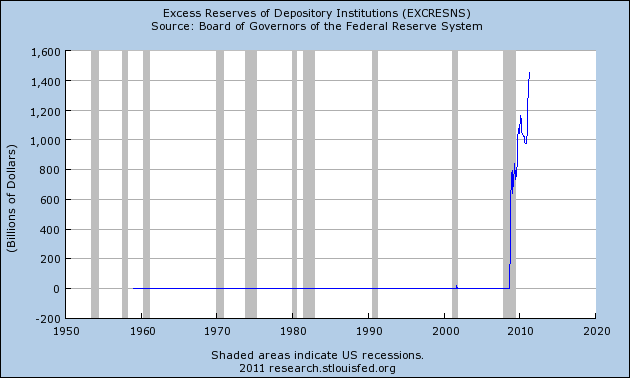
    #5 Back in 2008, banks had a total of 27 billion dollars in excess reserves at the Fed. Today, banks have a total of approximately 1.5 trillion dollars in excess reserves at the Fed. So what is going to happen when all of this money eventually hits the economy?....

    #6 If the U.S. economy is recovering, then why are shipments by U.S. factories still substantially below 2008 levels?

    #7 Why are imports of goods from overseas growing much more rapidly than shipments of goods from U.S. factories?

    #8 According to Zillow, the average price of a home in the U.S. is about 8 percent lower than it was a year ago and that it continues to fall about 1 percent a month. During the first quarter of 2011, home values declined at the fastest rate since late 2008. So can we really talk about a "recovery" when the real estate crisis continues to get worse?

    #9 According to a shocking new survey, 54 percent of Americans believe that a housing recovery is "unlikely" until at least 2014. So how is the housing industry supposed to improve if so many people are convinced that it will not?

    #10 The latest GDP numbers out of Japan are a complete and total disaster. During the first quarter GDP declined by a stunning 3.7 percent. Of course I have been saying for months that the Japanese economy is collapsing, but most mainstream economists were absolutely stunned by the latest figures. So will the rest of the world be able to avoid slipping into a recession as well?

    #11 Next week, Republicans in the House of Representatives are going to allow a vote on raising the debt ceiling. Everyone knows that this is an opportunity for Republican lawmakers to "look tough" to their constituents (the vast majority of which do not want the debt ceiling raised). Everyone also knows that eventually the Republicans are almost certainly going to cave on the debt ceiling after minimal concessions by the Democrats. The truth is that neither "establishment Republicans" nor "establishment Democrats" are actually serious about significantly cutting government debt. So why do we need all of this political theater?

    #12 Why are so many of our once great manufacturing cities being transformed into hellholes? In the city of Detroit today, there are over 33,000 abandoned houses, 70 schools are being permanently closed down, the mayor wants to bulldoze one-fourth of the city and you can literally buy a house for one dollarin the worst areas.

    #13 According to one new survey, about half of all Baby Boomers fear that when they retire they are going to end up living in poverty. So who is going to take care of them all when the money runs out?

    #14 According to the U.S. Bureau of Labor Statistics, an average of about 5 million Americans were being hired every single month during 2006. Today, an average of about 3.5 million Americans are being hired every single month. So why are our politicians talking about "economic recovery" instead of "the collapse of the economy" when hiring remains about 50 percent below normal?

    #15 Since August, 2 million more Americans have left the labor force. But the entire period from August to today was supposed to have been a time of economic growth and recovery. So why are so many Americans giving up on looking for a job?

    #16 According to Gallup, 41 percent of Americans believed that the economy was "getting better" at this time last year. Today, that number is at just 27 percent. Are Americans losing faith in the U.S. economy?

    #17 According to the U.S. Census, the number of children living in poverty has gone up by about 2 million in just the past 2 years, and one out of every four American children is currently on food stamps. During this same time period, Barack Obama and Ben Bernanke have told us over and over that the U.S. economy has been getting better. So what is the truth?

    #18 America has become absolutely addicted to government money. 59 percent of all Americans now receive money from the federal government in one form or another. U.S. households are now receiving more income from the U.S. government than they are paying to the government in taxes. Americans hate having their taxes raised and they hate having their government benefits cut. So is there any hope that this will ever be turned around before disaster strikes?

    #19 The combined debt of the major GSEs (Fannie Mae, Freddie Mac and Sallie Mae) has increased from 3.2 trillion in 2008 to 6.4 trillion in 2011. How in the world is the U.S. government going to be able to afford to guarantee all of that debt on top of everything else?

    #20 If the U.S. national debt (more than 14 trillion dollars) was reduced to a stack of 5 dollar bills, it would reach three quarters of the way to the moon. The U.S. government borrows about 168 million dollars every single hour. If Bill Gates gave every penny of his fortune to the U.S. government, it would only cover the U.S. budget deficit for 15 days. So how in the world can our politicians tell us that everything is going to be okay?